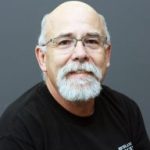
MANSFIELD — Mansfield Mayor Jodie Perry sat down April 28 with Richland Source Deputy Managing Editor Carl Hunnell for a “State of the City” conversation. What follows below is a transcript of that Q&A in City Council chambers, lightly edited for clarity.
The conversation focused on the three areas Perry has stressed since taking office in January 2024 — growth, infrastructure and safety.
GROWTH
‘Small steady growth would be some of the smaller businesses that we have seen opening’
Carl Hunnell: Let’s start with your stated priorities. When you announced that you were running for mayor way back in September 2022 at the Central Park Gazebo, you said Mansfield was prime for growth. In the highlight video we just watched, you said 2025 was a year that saw big changes and small steady growth. So what were the biggest changes you saw and how do you characterize what you said was small steady growth?
Jodie Perry: “So I think when I look back on 2025, small steady growth would be some of the smaller businesses that we have seen opening. I know one of the things that I see a lot on online is lots of downtown businesses have closed during the construction project — which is actually just not right.
“We’ve had, I think, four or five open in 2025, which is fantastic, and we’re already on a strong start this year with several more. So, you know, we’re excited about those. Those small businesses, while maybe they don’t have as many jobs or they’re not doing as much business, it also makes a big impact on our lifestyle because those are the things that really differentiate us from other communities around us or across the country.
“From a larger perspective, you saw in the video the spec building that Adena is building out at Airport West. So having a building ready to go when an industrial lead comes in is really key to being able to fill that because right now, we talk a lot about speed, risk and money, but businesses want to be able to get in quick. They want to start selling their product as fast as they can and they want to know that the building or the site that they’re choosing is ready for that that opportunity.
“The last thing I would just highlight is we spent time last year and we started our Mansfield Community Improvement Corporation. While it’s really taking its first steps this year, getting that set up was a really key part for the city of Mansfield to have a say in what happens to properties in our community. It’s really a tool in our tool belt if you think of it that way, versus just being a whole other economic development entity. But it’s a way that we want to get control back. Especially if you think of some of these blighted properties from out-of-town owners that maybe aren’t taking care of them. So this is another tool that we aim to use and and getting that going last year was a big deal.”

‘I’m probably just as impatient as anyone else in terms of wanting to see things just pick up quickly’
Carl Hunnell: We’re a little more than midway through your first term as mayor. Have you seen the growth that you hoped for that you talked about that day at the gazebo? What have you learned in office that you hope will help you quicken that pace going forward?
Jodie Perry: “I think we’re starting to see it. I’m probably just as impatient as anyone else in terms of wanting to see things just pick up quickly.
“It feels like at the beginning of 2026 we’re seeing that we’ve had a steady amount of projects going to (city) council asking for assistance … whether it’s housing, the redevelopment of the hotel, and then of course, Buc-ee’s, and some other things like that. We’re starting to see all of those pieces that we put in place start that domino effect.
“I think a big thing that I’ve learned is really asking a lot of questions upfront. You saw this a little bit recently in the conversation around the data center. But really we have sharpened our view of what we are looking for in terms of a development partner.
“People at the city laugh at me, but I say a lot of times, we have standards in the city of Mansfield. I jokingly say we’re not on Tinder, but we have raised the bar. We want developers … not just ‘Thank you for putting anything in our community.’
“‘No, it’s ‘Thank you, we want you to build the nice the nice things in all the neighborhoods, not just put them in some places.’ That has caused us to say to some developers (we’re) not sure you’re the right fit for us.I think that was a process for me to learn from taking office in 2024.
‘I think we’ve been able to show through a number of projects that we can get them from beginning to completion’
Carl Hunnell: I’m going to give a quick history lesson. When I came to town in 1990, Westinghouse was in its final year of operation. Ohio Brass was getting ready to close. Tappan closed in 1992. A very tough time in this city. I think the the only people that came downtown at night were looking for dive bars and maybe the assorted massage parlor. That’s what was in downtown Mansfield at the time. Things have changed in the last couple of decades. We’ve seen a lot of slow progress in some visible ways. But in last year’s State of the City, you said Mansfield has got to bring in new jobs and it has to grow its population. You said you hope the process in those areas could be sped up. So, how would you evaluate progress in those two areas, specifically job growth and population growth? And what, if anything, would you have done differently with a year’s worth of 20-20 vision?
Jodie Perry: “I think we’re starting to see that pick up. I know not everyone has the chance to have the viewpoint that I have as mayor, but I have a chance to talk to people a lot; people from all over the city, but also developers who are looking at coming here and there have been an enormous amount of housing developers looking at the city of Mansfield.
“There has been a significant amount … probably housing is actually maybe one of the biggest things that we hear about. We’re also hearing about further commercial and industrial development. So I think that pace is picking up, but I think we have still a little bit of a ways to go on that.
“I think continuing to do what we’re doing helps … being able to show that we’ve brought projects from beginning to end under this administration and showing them, ‘Okay, here’s what we’re looking for’ and being able to answer the questions that they have.
“All of that is speed to market. It really matters when we’re saying to someone looking at building in this area, whether they want to be a resident and move here or they’re going to move their business here, if we’re saying, ‘Come, we can help you be successful,’ but we can’t actually make that happen. That is obviously a severe block to that.
“But I think we’ve been able to show through a number of projects that we can get them from beginning to completion and get them open and I think that’ll continue. The only thing I would say in in retrospect of two years under my belt is I probably just would have told myself on Day One it’s going to take you a little bit of time to build that structure that architecture to be ready for that.
“But we’re there now. And so, I don’t think that’s also a coincidence that you’re seeing these projects come a little faster.
‘The secret of economic development is 80 percent of the growth comes from your existing businesses’
Carl Hunnell: I know everybody would love to see a 10,000-job factory like Westinghouse once had here or the other factories that we’ve had in town. But one of the things that I wanted to ask you about is in addition to trying to land a diversified group of employers to come to town, how important or how much in the mix is helping existing companies like Newman Technology, for example, and the job growth that they’re experiencing.
Jodie Perry: “This is where I spent my career. The secret of economic development is 80 percent of the growth comes from your existing businesses. So it’s really important that you’re working with them. Recently this year, of course, Newman Technology announced that they’re going to do a fairly massive expansion. It’s certainly a massive capital expansion, adding 70 jobs and really cementing their location here.
“So that is just as important to me, if not more quite frankly, than bringing in brand new businesses. You have to balance it. The new businesses get the headlines because you know when Buc-ee’s says they’re coming in, of course, you’re going to write about it.
“But it’s equally as important, if not more, to have those existing (businesses succeed). Now, I will say I might be the one person that says immediately (after landing a 10,000-job factory) … ‘How are we going to get those jobs? Where are those people going to live?’
“And I think we’re seeing that, you know, happen in Newark with Intel. Put aside all of the the business part of Intel and just the challenges they’ve had. I remember that day they announced that everyone was like, ‘Wow, Newark, congratulations.’ It has put an immense amount of pressure on that community. And they’re having to make very quick decisions.
“I would personally rather take five, 200-job companies over one 10,000-person company. Also, your eggs aren’t in one basket at that point.”
‘It’s really important that the deal, whatever the ultimate deal is, is a win-win-win’
Carl Hunnell: During your time when you were leading the Richland Area Chamber & Economic Development, you and others have told me over the years that economic development is a long game and that really nothing significant happens really quickly. So what do you as a mayor look for in a development partner or a project? What are some of the characteristics of a good potential project? And how do you know when it may not be the best fit for the community?
Jodie Perry: “It’s really important that the deal, whatever the ultimate deal is, is a win-win-win. In a lot of cases, we’re negotiating with a company and one of the tools that we have on the table is tax abatements. You may like them, you may not, but it is the realm that we deal in often.
“So it’s really important to me that if we’re going to put that on the table that the business understands the cost, first of all to the community by giving that, and that they understand and they’re not over-asking for an abatement that they don’t fully need. I think that one of the things that Barrett Thomas, our economic development director, and I talked about over the years when we worked together at the chamber was, I don’t think we always have to put the max deal on the table.
“This is negotiation at the end of the day. So let’s put a deal together that works. Again, we have said ‘No’ to another housing development that I thought was asking for completely too rich tax abatements and it just wasn’t going to work for the community where they were. Now, I left the door open. I think you build a good product. If you find another site that the deal works out, please call us back.
“You know, it wasn’t necessarily that they were a bad partner, but that deal wasn’t going to be fair to the schools. And of course in the environment we’re in, how the schools in the city work together is vitally important.
“The other piece is communication. And that’s where I would really attribute what happened last week (with the data center). That was the fault at the heart of that … people were saying things and we were not being listened to. After so much of that, the dollar signs or the potential impact for the community was big enough that we kept with it for a little while.
“The more it kept going, I’m like, ‘This is not sitting right with me.’ And then when that last step happened, it was like this is just very clear. We’re on a different pathway. You don’t have the same vision for the community and therefore I’d rather do something else. And I stand by that decision.
“I think it was the right one and I feel like there are other partners that we can deal with to give us a better deal.”

‘We’re busier than we’ve been in a long time is what I would say to that’
Carl Hunnell: One of the things that’s also been on the rise locally, and it obviously is needed, when there was a countywide housing study a few years ago, it found that not only does Richland County and Mansfield need things like low-income housing, it also needs market-rate housing. It needs housing at all levels, including affordable housing for seniors. Address or talk about what you’ve seen. I know there’s a new senior assisted living center getting ready to open on Cline Avenue. Last I knew, that was around a $30 million building. Maybe it’s more than that. I know you’re working with a couple of folks that want to build maybe more affordable senior housing. You’ve seen some individual houses spring up. So where are we at now in terms of the whole wide range of housing needs, specifically in the city of Mansfield?
Jodie Perry: “We’re busier than we’ve been in a long time is what I would say to that. That that was reflected in the video. $100 million of building activity. That was inclusive of housing and everything. And certainly the Silver Birch facility on Cline would be included in that. And yes, I think you’re in the neighborhood there … $30 million.
“I can tell you with all of the incentives that are on the table right now through the Ohio Housing Finance Authority, I get calls every few weeks from a new developer saying, ‘Hey, there’s incentives out there from the state. We want to come in and talk.’ In fact, I just answered one again tonight. We take a look at those closely to make sure again that we’re aligning.
“As part of being mayor, I serve on the (Richland County) Land Bank and we had the project at Ocie Hill come before us. When they came in, I met with them first off the bat, brought the Land Bank in, and I was like, ‘I don’t know. I don’t know how the neighborhood is going to respond to this.’ So I really pushed to have a public information session and they did. It was a great illustration to me of the importance of asking for feedback because I went in assuming people would not like that and it that was not necessarily the overriding sentiment that evening.
“Definitely wanting senior housing was the overriding thing. So that really helped change and scope that out. Fingers crossed that they get that grant and they can build there. I think that would really be transformative in the north end. But we need more of that for sure.
“Sometimes I feel like maybe we have a little bit of a target on our back for that. So we’re really trying to make sure that we’re leaning into also market-rate housing. In the housing market, it’s a ladder. So, if someone builds those high-end houses, someone’s opening up the the one below it and then the one below it and then the one below it.
“I know sometimes people get upset you’re not doing enough on one end or the other, but it really does all work together. And again, we’re starting to hear about market rate, which is exciting to me because I think, you know, that’s something that the city also needs.
‘It’s crucial, first of all, when you’re doing a project like that that we all work together’
Carl Hunnell: A lot of times development projects such as the one that everybody’s talking about, which is Buc-ee’s, requires more than one elected official or government entity to make it work. In the case of Buc-ee’s, so far you’ve worked with township trustees, county commissioners, city council members, and probably folks with the Ohio Department of Transportation, EPA, etc. Explain to folks how that collaboration works and how important is it to make projects like that happen?
Jodie Perry: “It’s crucial, first of all, when you’re doing a project like that, that we all work together. I think that it’s been happening pretty well here for a while. So we take it for granted. But you don’t have to go very far away to other counties around us to see places where it doesn’t. That absolutely in and of itself can stop your growth.
“When you have city and county arguing or township and city arguing … that doesn’t mean we always have to agree … but when we’re not willing to sit down and and find the best path forward (then) developers, businesses and people just don’t want to be a part of that.
“We have a really great relationship. One of the legs up that I had coming in was my time at the chamber. I had relationships with our commissioners, with our city council members … not as much with (township) trustees. I’m learning some of that area.
“I’m not having to call up the first time and say, ‘Hi, I’m Jodie, nice to meet you.’ I have those established things. A project like Buc-ee’s, it’s crucial the fact that we’re all able to get on the phone. ‘Hey, they have this question. How do we handle this? Residents are asking this. How can we make sure that we’re responding and listening?’
“And so again, this is something when developers come in, when outside people come in, it’s something that I talk about as a net positive for our community that we can just get people on the line.
“Again, I think we take that for granted at this point, but even in this community, it was not always the case.”
‘We’ve spent a lot of time just making sure that our employees know how fast they need to get back to people’
Carl Hunnell: In the video, you spoke about improving systems so that potential projects don’t get stuck. What can you tell us about what you’re talking about there because I found that interesting.
Jodie Perry: “I think that’s what I meant when I said we have worked on improving architecture. Our (city) Planning Commission is completely new, with the exception, I think, of one person.
“It wasn’t like I pushed people off. I just would like to be clear. But a lot of them had been on there and were saying, ‘Hey, I had been here a long time.’ So making sure that we have the right people at Planning Commission.’ So we’re having thoughtful conversations already in process.
“When I came in, our building department getting new software. It took them awhile to get that up, but it’s up and it’s improving the transparency to people. That has really helped that.
“We’ve spent a lot of time just making sure that our employees know how fast they need to get back to people.
“We’re all working together. One of the things that I did find when I got here was there were some silos that existed. And so that was a big piece of making sure things weren’t stuck. ‘Well, my department handled it. I don’t know about the next one.’
“No, that’s not good enough. We need to get it through all of them. And so I think we’ve developed at this point a good atmosphere around that and we can get everyone around the table and say, ‘Let’s just look at it. What concerns do we have?’ and let’s give it all at once.

INFRASTRUCTURE
‘At the end of the day, that’s the heart of your city. So it’s a big thing’
Carl Hunnell: Let’s move on to your second priority of infrastructure. The Main Street Corridor Improvement project began in the spring last year. It’s supposed to be completed by the end of October this year. With a price tag of just over $20 million, it’s the single biggest infrastructure project I’ve seen in the downtown since I’ve been around. Some residents and businesses have expressed frustrations. Many because of the amount of time that it’s taking, others due to the cost, thinking this money could be spent in other ways. So let’s ask both of those questions. First, why does this project take this long? And could you explain why it’s a lot more than just a streetscape project?
Jodie Perry: “Well, you just answered your own question. It is a lot more than just a streetscape project. It is often referred to as beautification and at the end of the day it certainly will be. If we’re digging things up, we’re not putting it back together in the same way.
“So there will be beautification as part of this. But at the heart of it really is infrastructure. When you think about it … Mansfield was founded in 1808 and Main Street’s been around a long time. We’ve found some interesting things when we’ve dug up a few of those intersections.
“The last major investment (into Main Street) was in the early 1980s. Ronald Reagan was president. When those water mains were put in it, was the 1920s. Women had just received the right to vote. So our infrastructure is aging. It had far outlasted its useful life.
“At the end of the day, this was one of the things … while I was not mayor when council and and Mayor (Tim) Theaker decided to approve this … I was on the other side pushing for it in my role at the chamber because it is the front door of our community, not just for Mansfield, but the entire county and the region.
“Unfortunately, at this point, maybe people don’t remember, but when you drove through that front door, there were crumbling sidewalks. There were weeds growing up. The lamps were crooked. We had missed parts of the sidewalk and so they were just asphalted over. Basically, no curbs existed anymore.
“So it was not giving you the best impression of what our community is. And when you think about a lot of the communities around us and other ones that people love to point to as aspirational, Wooster or Ashland, places like that, they did a downtown project. At the end of the day, that’s the heart of your city. So it’s a big thing.
“Again, I think people just don’t understand (the process). Could we have done it faster? Sure, if we shut it all down for months and months and months. To have shut the whole thing down to get it done faster would not have been tenable and it was never really even considered because we knew that was not possible.
‘We also have certain taxes that are earmarked and cannot be spent in other ways’
Carl Hunnell: In terms of the cost, I know the city has gotten millions of dollars in federal, state and regional funding. I think there was a $7 million federal RAISE grant that helped kick-start all of this. Those dollars were earmarked specifically for this work. I don’t know if all residents understand that there are different pots of money available for different things. The $7 million federal grant the city got for this has to be used on this project. You can’t just take that 7 million and say, “Let’s go fix some potholes.” So explain how pots of money … that whole concept … so maybe people have a better understanding of how that works.
Jodie Perry: “The budget that we talk about the most at council and in the city is our general fund budget. If you think of your household budget, that’s the thing that’s coming in on a regular basis. It funds the most amount of things. That is not quite $40 million but let’s round up for today just for ease. So that $40 million funds … a significant part of the city.
“But then we also have certain taxes that are earmarked and cannot be spent in other ways. We have our water main tax now. We have our so-called pothole haters tax or resurfacing tax. We have money that funds our parks, money that funds our safety services. So we have to make sure that we’re following all of those rules. And then of course, we have our enterprise funds, which is the money that you pay for your water and sewer and that can only be spent to go back into those utilities.
“I cannot take money from your water bill and put something in the park. I could put a water main in, I guess, but other than that nothing exciting. So when we look at a project, Main Street’s a great example … $20 million on the city’s general fund of $40 million a year. We would have never been able to do that if it was on the city. That’s why it’s so important that we go after those state funds, those federal funds.
“The city, I think at the end of the day, we’re roughly around $4 million in it, which means we were able to bring in about $16 million in grants. And a project like that does not come around very often.
“That has been a motivating thing for us to look at other projects like that just to make sure that we’re looking at all the sources. But I know it’s frustrating for people when they read a headline, ‘Oh, the city just spent $3 million on this. Why didn’t they fix the pothole on my street? Or why isn’t my water main fixed?’ And then a lot of cases, it’s down to the root of the money and we can’t just use it in any way that we want or we get in big trouble and we do follow that.”
‘When the city invests in itself, that sends a strong message to outside developers’
Carl Hunnell: One last question about Main Street, then I swear I’m going to move on. I know there have been concerns about businesses that might lose or have lost potential foot traffic during the project. I know of one business that’s gone up for sale down on Main Street. But how important are these projects when you look around at the Woosters and the Ashlands where these projects have been done? How important is it to the helping maintain and then grow retail along that corridor as well?
Jodie Perry: “It’s huge. The fact that we’re investing this much in our downtown … we’re already seeing some of the fruits of that in some of the projects that you’re seeing … the downtown housing that’s being proposed … the hotel project that’s being proposed. When the city invests in itself, that sends a strong message to outside developers that it is safe to put your money here … you will get a return back. So that’s at the heart of it.
“Of course, we have to make sure that we’re not harming the businesses that are already there. I cannot sit here and say nobody has had an impact. That would be ludicrous … everyone has had some impact on this. I think it seems seems to go in phases. that’s really how the construction’s going. So people might have some bad weeks in a row or bad days in a row, but then it’s picking up and you’re seeing that.
“Last year, most of the construction was down in the Carrousel District. That area is very busy this year and it has not kept people away from that. We all have our eye set on that end of October timeline. We’ll all be super thankful when it’s done. But the businesses at the end of the day are going to reap that reward when we have more people coming down and staying and spending their money.

‘Parks are a place that anyone in our community … it doesn’t matter your socioeconomic status … it doesn’t matter where you live … it doesn’t matter what you look like … what job you hold … we all can gather there’
Carl Hunnell: Infrastructure is more than just water mains, fire hydrants and treatment plants. It also involves things like city parks. The day that I learned that you had hired Louis Andress as your public works director when you started office, I said parks are going to be important to Jodie because you don’t hire Louie unless you really like parks. Why are public parks that important and what were some of the biggest parks improvements in 2025?
Jodie Perry: “I was part of the Mansfield Rising group. A couple other folks in here that were part of that. It was during that time that I think I really grew an appreciation for the importance that public property plays in a community. So parks are a place that anyone in our community … it doesn’t matter your socioeconomic status … it doesn’t matter where you live … it doesn’t matter what you look like … what job you hold … we all can gather there.
“That is really important to the health of a community. One of the things as I was coming into office was there was a lot of frustration about our parks. I think it’s fair to point out that during fiscal emergency, the city parks were just closed for eight years. So, you know, I appreciate that Mayor Theaker got the PRIDE tax passed and got work happening in our parks.
“They had a lot to catch up on, but I also knew I didn’t want to continue to take as long as it was. So we needed to step on the gas. Thankfully, ARPA (funding) was sitting on the table. That did fund quite a few of the the things that you saw. King Street Park, we just did a ribbon-cutting for that last week. That came out of ARPA. Some work we did at John’s Park came out of ARPA. Things like that. I mean, undoubtedly the biggest thing that happened last year in our parks was Sterkel. If you hadn’t seen Sterkel (before improvements) it’s just kind of embarrassing that that’s where it was.
“But I am equally as proud of of those other things. At King Street this week when we finished, there was a resident across the street who was mowing and he was like, ‘Hey, you’re the mayor, right?’ Yeah. And he’s like, ‘I see people over here playing basketball all the time and I appreciate that you put money into this.’
“That was a park that, when we pulled up to it on our drive around, it looked fine from the curb. But we got out and realized everything here is broken. It’s not … who wants to hang out here? There’s really nothing that you can do.
“All the work that happened at Liberty (Park) and the great thing about parks and what has happened is it has not just been the city. It has been so many people stepping up … including Richland County Foundation. Coca-Cola gave us that beautiful court at Liberty, which will be restored by the way (after a vandalism incident last month). Churches built a bridge for us. So many volunteers have helped with this and we’re still seeing people come and call and say we want to help with other things.
“That’s what gets me excited about this job is when you know people start believing in their community again and they start to see and feel some of the changes that are happening. It’s always exciting when that happens.”
SAFETY
‘Public safety kind of is the underlying foundation of everything we’ve talked about’
Carl Hunnell: Let’s move on to that third priority. When you talk about safety in Mansfield, it’s one of your three priorities when you took office. I want to ask, what does that mean to you as mayor? How do you define it? And what are the keys to achieving it? Because safety is kind of a broad word. So, help us figure out what you mean by that.
Jodie Perry: “I would say public safety kind of is the underlying foundation of everything we’ve talked about, right? If we don’t have a safe community, if as a resident you don’t feel safe to be in our parks, if you don’t feel safe to walk around your neighborhood, if you don’t feel safe to come downtown, then you’re not going to want to spend money here. You’re not going to want to build a house here if we’re putting money into things that are constantly being torn up.
“I ran for office in 2023 and took office in 2024. In 2023, we set a record that we never want to beat. Most homicides. That is in our rearview mirror. We’re not going back there, as far as I’m concerned. But you certainly couldn’t ignore it, nor was I even tempted to. It really was impacting the community.
“A lot of them, it wasn’t random things and and things like that. But when you’re hearing that over and over and I started to see the chatter online, ‘Oh, I would never go to Mansfield. I don’t feel safe there.’
“That’s a problem for our community to grow. More concerning to me was the people that live here and talking to a mother whose son was shot and that the experience that they went through with that. (I talked) to kids in Mansfield are like, ‘I don’t think I’m going to live past 2021, so I don’t care. I’m just gonna do what I do.’
“That is the trajectory that we have to change in this community. And it is not a city problem. It’s a U.S. problem, right? It’s all of us. We need our faith community. We need our families. We certainly do need the city. We need other partners to come around. And I think you’re starting to see that.
“I think a lot of folks have stepped forward to help with things. But safety to me is it’s physical safety, it’s mental safety and emotional safety that people feel like they belong in Mansfield.”


‘I think we’ve got great chiefs in both departments. They have strong visions for what they’re doing’
Carl Hunnell: A few years ago, the Mansfield Police Department saw the number of sworn officers drop into the low 60s at one point. You’re now almost fully staffed (91 officers). The fire department has been stable the last couple of years in terms of its staffing. What has been the key to stabilizing the numbers and the safety forces, bringing up the police department and kind of keeping the fire department at its set levels?
Jodie Perry: “I do want to give credit where credit’s due. A lot of this started before I came in. (Safety-Service Director Keith) Porch, when he was chief, passionately advocated for the administration to add the signing bonus and really start to take a look at where we were hiring people in.
“I think we can all think back to the last five or six years. There has been a lot of conversation around public safety in our country and that has gone through a lot of iterations. We were not alone in seeing the difficulty in attracting people to come into these roles.
“But I do think it’s helped all of the work that they’ve done in terms of hiring, targeting candidates. Today, I was out at Buckeye (Community) School and our community policing officers were there. As kids are moving up in in this school-based program, they’re like, ‘Hey, we want you to be a cadet at Mansfield Police. We want you to to come in.’
“I’ve gone through now a round of contracts with all of our bargaining units. When I’m talking about employee recruitment and retention, at the end of the day, everyone has to have a paycheck. They have to make ends meet. We have adjusted salaries, not just in safety forces, but across the city. I definitely think that makes a difference.
“I’m cautiously optimistic. We’re seeing improved response to our testing. It’s not where it was, but I think we’ve got great chiefs in both departments. They have strong visions for what they’re doing. One of the things that excites me about being back to full staffing, particularly in police, is that we have community policing officers again.”
Carl Hunnell: Let’s look at those numbers and match up the growth and investment that we’ve been talking about. The city is seeing growth around Mansfield Lahm Regional Airport. I know efforts are underway to continue and maybe accelerate that growth. As everyone knows, we talk about a Buc-ee’s opening up on new land that would be annexed into the city out by I-71 and Ohio 39. There’s been a great deal of public investment in many areas, including parks. If growth continues, including population growth, do you believe the numbers and the safety forces would need to grow also? And is that something you look at as you see that growth, as revenues grow, you get expansion in city-owned territory or city land, what happens there?
‘I would love to be able to bring more people on. We’re not there yet’
Jodie Perry: “If we grow … when we grow … let’s say it that way … when we grow, we are going to need more police and firefighters.
“I’ve had this conversation not just with both chiefs, but with bargaining units, too. I’m leaning hard into growth and I realize when I’m saying that, that means there’s going to be additional costs that come with that. I look forward to a point in time that we can do that.
“I would love to be able to bring more people on. We’re not there yet. We’ve kept a flat budget the last few years and hopefully with some of these projects getting off the ground, we’ll we’ll push through that. There isn’t necessarily a number that I’m following, ‘Oh when we grow so much, this is when it is.’ But it’s certainly something that I’m fully aware of as we continue to grow that that’s going to mean (hiring) and not just police and fire, by the way, as we add streets I’m going to need more people to take care of those too.”
‘They are the quiet backbone of everything that we do, from recruiting employees in to the guys that are helping make tonight a reality’
Carl Hunnell: There are certain aspects of a city operation that really nobody seems to notice until something goes wrong. I’m talking about the service complex maintenance, IT, human resources. How would you evaluate progress in some of those areas of your administration?
Jodie Perry: “They are the quiet backbone of everything that we do, from recruiting employees in to the guys that are helping make tonight a reality. They’ve done a really fabulous job. Just as a reminder, my first month in office, we had difficulty staying connected to the internet in the city. A lot of people might have forgot that. I certainly didn’t because everyone was yelling at me and I’m like, ‘Hey, I’m new here. I don’t know what’s going on and I’m trying to to figure it all out.’
“And we did. And you know ultimately now with (Mark Huckleberry) in charge of the department … it’s just night-and-day the difference in terms of our cyber security, just the professionalism that we’re looking at and I’m excited about that.
“The investment that we’ve done in the city building itself. Yes, this (remodeled City Council chambers) was part of a big project, but (Gary Utt) and his team have really worked hard on a lot of other pieces around the building. Everything from painting to moving walls to kitchens to just making sure that this building — that was built in 1976, I was born in 1976 — but is up-to-date for these standards.
“We have 476 employees, so our HR department stays really busy. We constantly have people coming in and we’re constantly posting jobs. So that those are not the things that always make the video, unfortunately, but it’s really the strong backbone of of what we do.”
‘Making sure that we’re communicating with residents means everything’
Carl Hunnell: Now we’re going to wind down with just a few minutes left. But when you ran for office, Jodie, one of the things you talked about in the campaign was being present, communicating with residents, and operating the government transparently. Give yourself a grade in those areas and explain how you got there and what are the next opportunities in those areas.
Jodie Perry: “So, those were actually really the only things I promised during the campaign because I just did not know what I was going to face when I got here. I didn’t want to go out on a limb and make all these promises that I couldn’t keep. I’m very happy and satisfied with what I’ve done on that.
“I’ve stayed active in the community. I definitely feel like I am accessible. I am managing my own Facebook page. So when you send me a message, it is me that sees it. I may be asking someone else to answer from time-to-time, because I cannot know everything in the city. Making sure that we’re communicating with residents means everything … (including) something like this so that people, whether you wanted to come or watch it or not, it’s there and someone can find out what they need to know about the city.
“With the Facebook page as well, both the city and mine, we’re just trying to show people a little bit of what we’re doing. It’s not everything by far, but it’s just a little taste of that.
“I think as far as transparency, the data center was a good example of that — and trying to show in the end, here’s why we were looking at it at the beginning and here’s why I’m saying no at this point.
“In the last year, there was a few points where I ended up going on Facebook to communicate with residents. I think that, not everyone appreciates it, but a lot of people do … I want to continue to be able to do that.

‘I think you should continue to expect good news coming out about projects’
Carl Hunnell: Finally, this evening has been based primarily on the state of the city through 2025. But we’re already four full months into 2026. We’ve seen a lot of new developments — the aforementioned Buc-ee’s, the Main Street project, millions of dollars in downtown housing that may be developed through the Richland County Foundation based on a donation from John and Mimi Fernyak. So, what can you tell us to expect in the next eight months? And how will that play when we sit down next year to do the (next) state of the city?
Jodie Perry: “I think you should continue to expect good news coming out about projects that we’re working on.
“I will say last year was kind of a high point as far as public projects that were in … some of them were long in process … others kind of jumped up a little more quickly. Obviously, we’re not able to to continue that trajectory quite as fast — unless more money drops from the sky, which it has not yet.
“So, some of that is is slowing down. You’re going to see our projects maybe not as big of scope, but they’re still going to be going on. Of course, the water main replacement and more work in the parks is coming. But I’m really bullish that you’re going to hear more positive economic development stories this year.
“There’s some exciting things that people are looking at. We’ll see if they come together. A lot of times, it’s a long time of talking before a project comes to fruition, but I think there’s reason to be optimistic.”
‘We’re going in the right direction. I firmly believe we’re on the right path’
Carl Hunnell: There’s things we didn’t talk about tonight. The proposed aquatic center, which I think you just got the survey results back. So that’s going to be something we’re going to be talking about (in the days ahead). If the Ohio Department of Development writes the check, maybe we can get West Park finally torn down. I swore I would not retire until that building went down first. So we’ll see how that plays out in the months ahead. A lot of things going on still. Mayor, thanks for having me in for this conversation tonight. it’s been interesting to sit on this side of the table during an evening. I’ve had a lot of fun. I’m going to stop here and give you a chance for closing thoughts.
Jodie Perry: “Thanks Carl. I appreciate your time and effort in doing this and I just want to thank everyone here and anyone who tuned in. I appreciate people’s support and encouragement for Mansfield. We’re going in the right direction. I firmly believe we’re on the right path.”