
MANSFIELD — Director Frank Darabont doesn’t think people ever needed to have served time in prison in order to relate to his iconic “Shawshank Redemption” film.
“The movie really does kind of play like a Rorschach test for people and they project their own life difficulties into that movie,” the 65-year-old director said Friday afternoon at the Renaissance Theatre in Mansfield.
“It’s not necessarily about did you do time in prison. It’s do you have a job that’s destroying your soul? Do you have a marriage that’s not working?
“Whatever the difficulties are, people project that into the movie and and they get reassurance and comfort from it.
“That’s a very interesting thing for a movie to have achieved,” Darabont said during a media session in The Ghostlight Lounge in the lower level of the Renaissance before moving upstairs to participate in a panel discussion in front of a packed house in the main theater.
“I’ve gotten letters from people who were thinking of committing suicide because they’ve lost all hope and then they saw the movie and decided to keep going and now life is treating them well.
“They’re making the most of it. That’s tremendously satisfying and very, very unusual. So credit to Steve,” said Darabont, who wrote the movie’s screenplay based on a novella by author Stephen King.
It was all part of the kickoff event-filled weekend to celebrate the 30th anniversary of the release of the film shot largely at the former Ohio State Reformatory and sites around Mansfield and Richland County.
(Click here to see a complete list of “Shawshank Redemption” events this weekend.)

The three-time Oscar nominee was born in a refugee camp in 1959 in Montbeliard, France, the son of Hungarian parents who fled Budapest during the failed 1956 Hungarian revolution. Brought to America as an infant, he settled with his family in Los Angeles and attended Hollywood High School.
He made his way up in the film industry the old-fashioned way. He worked at it in every level, starting as a production assistant on the low-budget film, Hell Night (1981), starring Linda Blair.
He spent the next six years working in the art department as a set dresser and in set construction while struggling to establish himself as a writer.
His first produced writing credit (shared) was on the 1987 film, A Nightmare on Elm Street 3: Dream Warriors (1987).
Darabont is one of only six filmmakers in history with the unique distinction of having his first two feature films receive nominations for the Best Picture Academy Award: 1994’s The Shawshank Redemption (1994) (with a total of seven nominations) and 1999’s The Green Mile (1999) (four nominations).
The remarkably affable Darabont has earned his stripes in the film industry.
But he clearly understands the value of teamwork and input, even when it came to the final scene in “Shawshank” when his primary characters from the prison are reunited on a beach in Mexico.
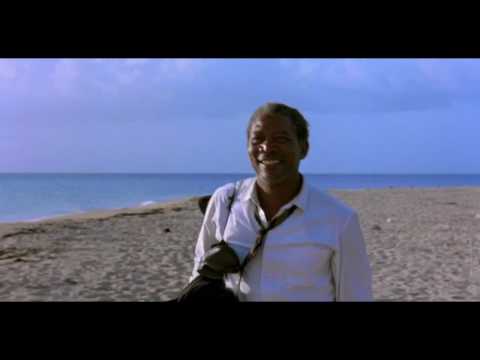
Darabont’s original vision was to end the movie with Red (Morgan Freeman) on a bus, leaving his fate ambiguous. Producer Liz Glotzer and others at Castle Rock Entertainment believed the better choice might be the beach reunion.
They encouraged Darabont to shoot the beach scene and then make up his own mind.
“When I was in the editing room with Richard Francis-Bruce, my brilliant editor, we both fell in love with that ending. Once we saw it cut together, we thought, ‘Well, that is the absolute ending for the movie. There’s no question about it.’
“So we never even (audience) tested the movie without it,” Darabont said.
“It pays to hear what other people’s input is at times, even if you have a very, very clear idea as a filmmaker of the movie you’re trying to make. Keep your ears open and keep an open mind about stuff because sometimes the suggestions you hear are the right ones,” he said.

While he trusts the input of others, Darabont also believes in himself. He wrote the “Shawshank” screenplay after paying King just $5,000 for the rights. (King never cashed the check and late returned it to the filmmaker in a frame).
He waited five years to write the screenplay after obtaining the rights, saying he needed to mature as a writer before tackling the story.
He pitched it to Castle Rock, who loved it. In fact, director and Castle Rock co-founder Rob Reiner offered Darabont about $2 million for it if Reiner could direct himself, using perhaps Tom Cruise and Harrison Ford in the lead roles.
Darabont declined and Castle Rock ultimately allowed him to proceed with the film on a $25 million budget. The filmmaker said he declined the millions because he wanted to make the movie himself.
“It probably boils down to … you feel like you have been put here for a reason. If not this, then what? If not now, then when?
“You can always defer your dream for a buck. But no one remembers you for your bank account when you are gone. They might remember you for your art. They might remember that you reached out and touched their hearts … and that mattered more to me than anything,” Darabont said.
The screenplay Darabont wrote has been hailed by Freeman, actor Timothy Robbins (Andy Dufresne) and a host of others as the best they had ever read. He fleshed out King’s novella, adding depth and nuance to the characters.
One of those characters was Brooks Hatlen, the “old con” who was released from Shawshank after a lifetime behind bars. In King’s novella, Hatlen couldn’t handle the outside world and just died in a nursing home.
But Darabont said he knew there needed to be more to Hatlen, portrayed in the film by the legendary James Whitmore, who died in 2009 at the age of 87.
He said “Red” talked about prison was no place for hope and how “Andy” said hope meant everything. Darabont said Hatlen was the “fulcrum” upon which the entire movie was balanced.
In the movie, Hatlen finds peace with the fact he cannot survive in the outside world and hangs himself in his rooming house, a scene Whitmore narrated.
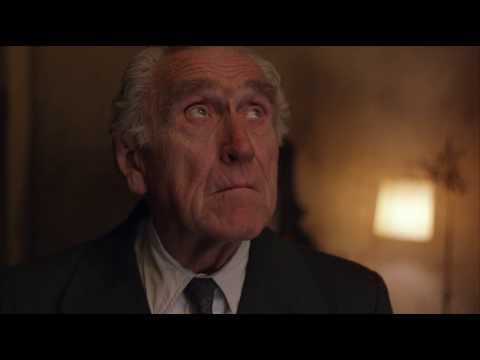
“I was so incredibly honored to work with Jim Whitmore … several times actually. He’s the most memorable thing in the movie.
“When you’re adapting something, there’s an idea in there that an author like Stephen King can internalize. He can tell you what the theme of the story is without actually having to necessarily illustrate it or show it.

“I think I needed that character in the movie. I need to actually see that character because the theme of this thing is hope versus despair versus hopelessness. (Andy) is on one side of that equation and (Red) is on the other.
“I need a fulcrum to be able to actually illustrate the theme of this movie. I need somebody to walk the path that Morgan’s character will have to walk (in order) for the audience to understand what the theme of the movie is … what we’re trying to deliver.
“That was to me just a natural screenwriter’s thing to do,” Darabont said. “Thank God (that) James Whitmore was there.”