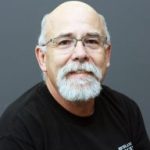
MIFFLIN TOWNSHIP — Ohio State Highway Patrol Lt. Jason Murfield didn’t hit his goal Thursday night during an OVI checkpoint on U.S. 42.
“My goal is zero (impaired drivers),” the commander of the Mansfield Post said before a 90-minute checkpoint began northeast of Mansfield. “That would mean everyone was complying and driving safely.”
Instead, out of 398 vehicles encountered, one man was diverted for field sobriety testing and was later arrested for suspected OVI/DUI during the checkpoint from 7 p.m. to 8:30 p.m.
That’s 0.0025 percent of the drivers troopers encountered on a cool, sunny early evening on the busy highway that connects Mansfield and Ashland.
It was one of 14 OVI checkpoints taking place in counties around Ohio during what the OSHP called a “statewide” enforcement effort Thursday, Friday and Saturday evenings. A similar checkpoint was conducted Thursday night in Ashland County and one is planned in Knox County on Friday night.
“This is the first time that in my career that we’ve done this statewide,” said Murfield, who has been with the patrol for two decades. “Over the course of the next three days, they’re going to be developing these throughout the entire state in different counties on different nights.
“This just happens to be in Richland County tonight. The statistics show that this week has a high volume of OVI impaired drivers throughout the state,” he said.

Murfield said each county normally conducts an OVI checkpoint annually.
“We also keep an open eye for trends. If we start seeing too many trends or something, we might start to develop a plan for one. We try to look at the statistics that show that in a certain area that we have a higher rate of OVI crashes or OVI-related arrests and then that’s where we try to combat the problem or educate the public,” he said.
It’s not the first time the spot on U.S. 42 has been chosen for a checkpoint.
“We pull up statistical maps and we look for different areas. A lot of times we’ll try to pick out different areas so we’re not in the same area. Madison Township, or the Madison area, typically has a higher OVI-arrest (rate) and OVI-crash rate for us,” Murfield said.
He said it’s more difficult to do a checkpoint closer toward town due to side streets, gas stations and other businesses.
“We try to push out here a little bit so we’re still in the area of where we’re trying to educate and (arrest) those impaired drivers before they turn into a crash or a statistic,” he said.
Before the checkpoint began, he said actually finding an impaired driver during such stops is not as common as it once was. Each driver was handed a card explaining the reason for the OVI checkpoint.

“We also use the OVI checkpoints as an education tool, so it also educates the public as they come through. We talk to people and we’re educating them about impaired driving so they can make a better decision.
“Because if we can stop them with education and stop them with a simple conversation, that’s where we would prefer to stop somebody from being impaired drivers,” he said.
He said the vast majority of motorists understand the reason and need for such checkpoints.
“We engage with the public and we encourage people to have conversations with us. Sometimes people are just thanking us for what we’re doing. We appreciate that.
“We also thank them for not being impaired drivers, because we would prefer to just send you on your way and not impede your traffic and let you go on about your way as long as you’re going safely,” he said.
(Below are photos taken Thursday evening during an OVI checkpoint on U.S. 42 in Mifflin Township.)