

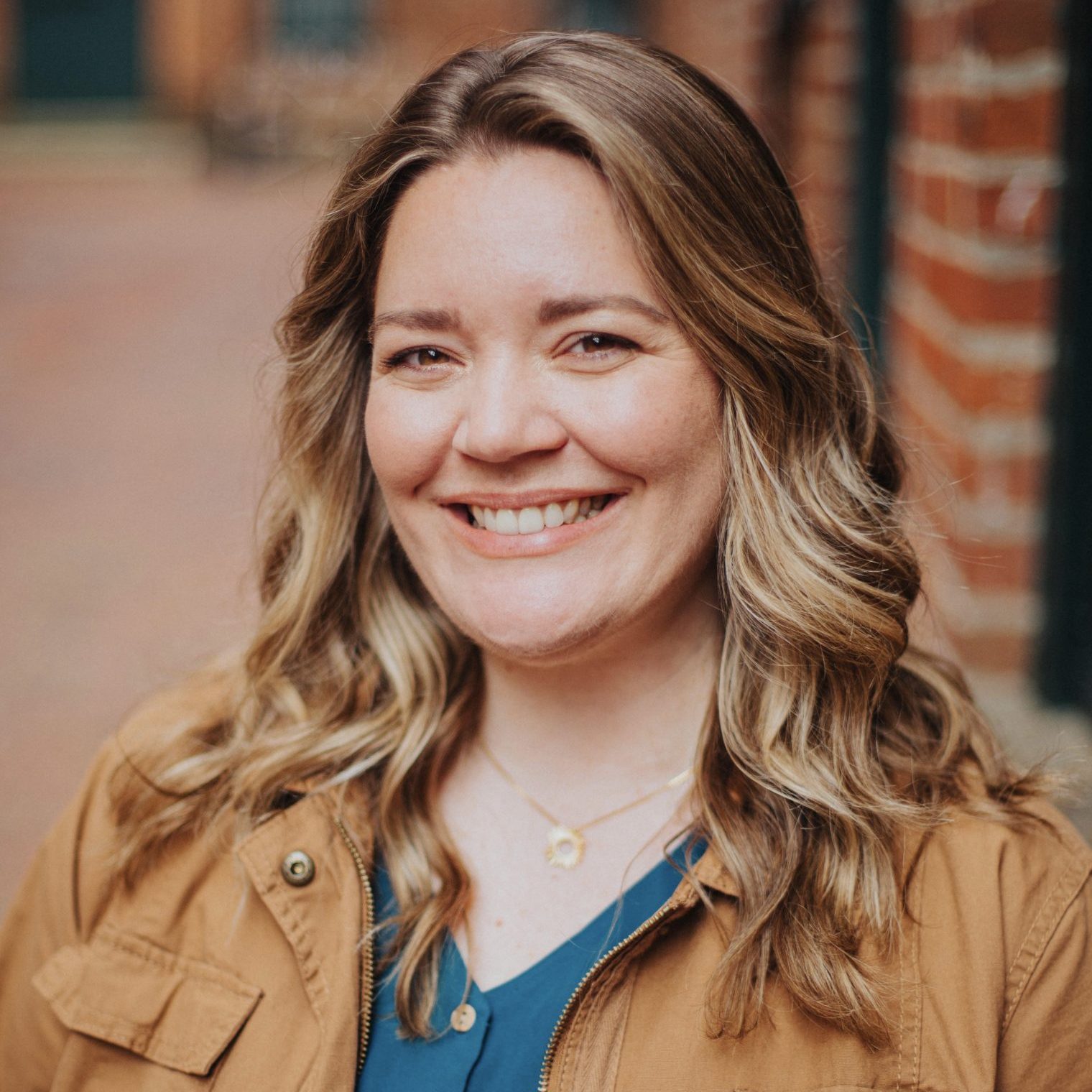
Join us on October 2nd for the next Kaleidoscope Community Conversation with Dr. Lerone Martin
5:30 pm at the Renaissance Theatre
This pay-what-you can event is open to everyone. RCT will be providing complimentary door-to-door transportation services to residents of Mansfield, Ontario, Madison, and Lexington. To schedule your ride, call RCT at 419-522-4504.
MANSFIELD — On a September night in 1962, visitors packed the pews of Mount Hermon Baptist Church in Mansfield to absorb the words of a young preacher from Alabama.
“We stand on the border of the promised land of integration. Old Man Segregation is on his death bed,” the Rev. Martin Luther King Jr. declared.
Today, King is remembered as a national icon of peace and unity. But when he stood at the pulpit in Mansfield, he was among the most polarizing figures in America: Praised by many, vilified by others, and targeted by FBI director J. Edgar Hoover.
In November 1964, responding to King’s criticisms of the Bureau’s performance in civil rights cases, Hoover called the pastor “the most notorious liar in the country.”
That history is at the center of a book by Fostoria native Dr. Lerone Martin, now director of the Martin Luther King Jr. Research and Education Institute at Stanford University. Martin will speak at the Renaissance Theatre on Oct. 2 as part of the Kaleidoscope Speaker Series.
Martin’s work sits at the crossroads of religion, race, and American politics — much like King himself. His talk on Oct. 2 aims to encourage audiences to listen deeply, speak truthfully, and engage constructively across lines of difference.
“King’s faith taught him the most important thing for one to remember is human beings are made in the image of God … that means every individual is important, and every single life is important,” Martin said. “If we start from there, that is a message of universality.”
The paradox of King — a vision of unity clashing with fierce opposition — still resonates today. Much of the nation continues to wrestle with political polarization and the challenge of bridging divides.
“Even in the midst of King’s message, there were many people who opposed him,” Martin said. “But I still think we can learn from King and bring people together for a common cause if we can start from the basis of our shared humanity.”
Conflict avoidant
King’s words may offer a map toward bridging divides, but in order to get there, it requires leaning into hard conversations instead of retreating from them.
Journalists Amanda Ripley and Hélène Biandudi Hofer, co-founders of Good Conflict, describe polarization not as a sign of too much conflict, but too little. In fact, they say polarization is another form of conflict avoidance.
“We think of political polarization as nasty, dysfunctional conflict all the time. But there’s this paradox we’re living through where as some people get louder and louder, most people go quiet,” Ripley said.
“In a polarized society like we’re in, it actually absolves you of having to have hard conversations even internally because you can just blame the other person. The less conflict you have, the more allergic you get to even low-level conflict.”
Hofer put it more bluntly: “We are just not conflict-fluent as a society. Which begs the question, what’s the bridge?”
That question is just as relevant in Richland County as it is in Washington. For State Rep. Marilyn John, bridging divides has been central to her career in public service.
John began her political journey as mayor of Shelby, later served as a Richland County commissioner, and now represents the region in the Ohio House of Representatives. She is only the second woman to have served in each of those positions.
At every step, she has confronted the challenge of division — but at the Statehouse, she found it in an unexpected place.
“There’s certainly a political divide,” she said. “But in my four years as a state rep, the divide has been much more within my caucus … leadership divides that separated the Republican caucus to the point we weren’t really functioning.”
Through it all, John said her faith and her conscience keep her grounded. That was especially true during the House’s 2021 vote to expel former Speaker Larry Householder after his role in a $60 million bribery scandal.
“It was the easiest vote I’ve ever cast,” John said. “I couldn’t give up my integrity for certain things. People like that make it really hard for people like me to do my job well.”
Martin sees that same tension as one of the defining challenges of leadership.
“There are times to be a true leader and to serve people where you have to turn your back to the crowd and stand on principle and stand on integrity, even when at times it may not prove popular,” he said.
“One of the challenges in our democracy is there are many elected officials who see politics not as a form of service, but as a power they must hold onto.”
John says she has seen echoes of that dynamic in Columbus.
“The higher you go, the more politics becomes about power,” she said. “I try to stay grounded in why I started — to serve people back home.”
There comes a time when one must take a position that is neither safe, nor politic, nor popular, but one must take it because one’s conscience tells one that it is right.
Dr. Martin luther king, jr.
The person holding down the fort at home is Steve Schag, who has served for years in a dual role as mayor of Shelby and pastor of Calvary Baptist Church, just across the parking lot from city hall.
Schag said he has always viewed his time in office as an extension of ministry — not in the sense of preaching, but in the sense of serving. His daily prayer is to be a servant leader of the city of Shelby.
“We’re human being serving other human beings,” he said. “I ask that our citizens may prosper and our businesses may prosper, in order that we may provide public services that they deserve.”
That approach has carried into the regular lunches he shares with other mayors in Richland County. Around the table, leaders from Mansfield, Shelby, Ontario, and beyond bring different political affiliations, different priorities, and different styles of governing. But Schag said the goal has always been to find common ground.
“We are a family of communities, and I think we have a great model of working together,” he said. “When I go to a voting booth, who wears a D and who wears an R doesn’t matter to me on a local level.”
In Shelby, that kind of collaboration has often been the key to progress.
“In elected office, you often have to have discussions with people who believe very differently from you,” he said. “You have to learn how to have discussions and disagreements, and I always seek to understand, even when it’s difficult.”
Non-violent means
Dr. Martin Luther King, Jr. visited Mansfield one more time in October 1965, almost a year after winning the Nobel Peace Prize.
He spoke of the danger of the white supremacy movement, disturbed by recent meeting of the Ku Klux Klan groups in Ohio.
“These meetings reveal that the Klan-type movement is not sectional of southern but that there are groups in many places who would block Democratic principles and American ideals,” he said. “We must be eternally vigilant, or we will wake up and find large memberships capable of as much violence and terror as the Klan has perpetrated in the South.”
He never returned to Mansfield.
On April 4, 1968, King was assassinated in Memphis, Tennessee, as he stood on the Lorraine Motel’s second-floor balcony. He was 39 years old.
In a moment where political violence once again feels especially amplified, Martin offered a reminder that the most successful political movements in this country and abroad were accomplished using nonviolence.
“I think at this moment in our country, that’s something we should all remember as polls tell us that Americans are more likely to accept or believe that political violence is necessary to bring about change,” Martin said.
“History tell us those changes aren’t enduring. They won’t last.”
I have tried to make clear that it is wrong to use immoral means to attain moral ends. But now I must affirm that it is just as wrong, or perhaps even more so, to use moral means to preserve immoral ends.
Dr. martin luther king, jr. in his letter from the birmingham jail

