


It was the most famous war-time statement that thankfully, by the grace of God, was never issued.
But Gen. Dwight D. Eisenhower, the Supreme Allied Commander in Europe during World War II, was prepared if the invasion of Europe failed on June 6, 1944.
Then just 55 years old, Eisenhower was ready to take the blame if Operation Overlord failed on the shores of Normandy, France, 80 years ago today.
“Our landings in the Cherbourg-Havre area have failed to gain a satisfactory foothold and I have withdrawn the troops. My decision to attack at this time and place was based upon the best information available. The troops, the air and the Navy did all that bravery and devotion to duty could do. If any blame or fault attaches to the attempt it is mine alone,” the future U.S. president penned in his own hand the night before the assault began.
Hindsight is a wonderous thing. History shows successful landings on those five French beaches — Utah, Omaha, Gold, Juno and Sword — the beginning of the end for Adolph Hitler and Nazi Germany.
But looking back across eight decades today, it’s good to recall success was not guaranteed that fateful day, often called “The Longest Day.”
In fact, success was very much up in the air for the most complex military amphibious invasion ever attempted. Success had to be earned.

Professor John Moser, chair of the Ashland University History and Political Science Department, said in the hours leading up to the invasion that Eisenhower was hopeful, “but by no means convinced” the assault would be a success.
“Many people don’t realize that he had composed on the eve of the operation two different letters. One was the one that he released to the press (after the invasion), announcing the beachhead had been established and this was a great day for the Allied military cause,” Moser said.
“He had a second letter, which fortunately he never needed to use, where he said, ‘Unfortunately, despite all of our plans and preparation, the invasion was a failure. I accept full blame for this and no blame should be attached to the brave soldiers who participated in the operation.’
“So he was prepared for either eventuality,” said Moser, author of several books, including “Global Great Depression and the Coming of World War II.”
More than 13,000 U.S. paratroopers dropped into France after midnight on June 5. The invasion force of 133,000 Allied troops arrived at the Normandy beaches from England on 7,000 ships manned by more than 195,000 naval personnel from eight Allied countries. A massive naval and aerial bombardment began at 6:30 a.m.

D-Day had begun — much to the surprise of the Germans, who believed the weather made an invasion at that time unlikely and who also fell victim to Operation Fortitude.
The operation was an elaborate web of deception that had been spun for almost a year. The aim of the deception was to reinforce the belief among those in the German high command that the main Allied landings would be in Pas-de-Calais, across the Strait of Dover – not where they would really be, in Normandy.
“The German general staff was convinced landings were going to take place at Pas-de-Calais,” Moser said. “For one thing, it seemed like a more obvious choice. Beaches were more flat, more level. It was the closest point to the U.K.
“It was within easy reach of major ports because it was critically important that a major port be seized within three days to allow the invasion force to be supplied,” Moser said.
The deception also included inflatable tanks, fake radio messages and fictitious unit uniform patches.

The complex plan also included a key component — Gen. George Patton — who was chosen to lead a fictitious army — the First U.S. Army Group stationed in southeast England.
Moser said the Germans believed Patton would lead the assault, which he said was the most convincing part of the deception plan.
“They had encountered him in North Africa. They had encountered him in Sicily, They thought (Patton) was absolutely topnotch. Patton was the U.S. commander they most respected.
“Now we know that Patton was in the doghouse during this period for slapping a GI in a field hospital in Sicily. But that didn’t make sense to the Germans,” Moser said.
“Being in the German army meant being physically abused on a regular basis. They wouldn’t have understood why Patton would have been in trouble.

“All they saw was ‘Wow, Patton is in charge of the first U.S. Army Group. This is a serious unit. There is no way the Americans could be planning a landing in northern France and not have Patton intimately involved in it,'” Moser said.
The professor said there was one German leader who thought the invasion would begin somewhere other than Pas-de-Calais — Adolph Hitler.
“Hitler himself always liked to do the unexpected. He though Pas-de-Calais looked too obvious and thought (the Allies) were planning something else. He allowed his generals to convince him otherwise,” Moser said.
It certainly helped that German Gen. Erwin Rommel, who had helped fortify the Atlantic wall, believed the weather would prevent the invasion and left the front lines to return home to German to celebrate his wife’s birthday on June 5.
Once the invasion began, it was in the hands and minds of the soldiers on the ground, including young officers and non-commissioned officers. They were empowered to make critical decisions during the battle, something not permitted in the German army they faced, according to Moser.
“This is a really important point, as opposed to the German or the Soviet armies where really every move that a non-commissioned officer made in the field had to come from above or at least be approved from above,” he said.
“There was a much more flexible system in the U.S. Army and the British Army, as well, in which these lower level commanders were able to to adjust their tactics and their strategy based on the information that they had on the ground,” Moser said.

“Because after all, it’s a considerable time for information about what’s going on to make it to headquarters, for the higher ranking commanders to decide how to respond.
“And then to convey that message back (to the front lines) could easily have led to paralysis,” he said, “if lower-level commanders had not felt empowered to make certain decisions on the fly.”
Some of the soldiers making decisions on the ground with members of the 101st and 82nd Airborne Divisions, who were forced to make choices after many of the paratroopers were dropped far off course from their expected landing sites.

They did what the American forces on “bloody Omaha” beach did — they improvised and made a difference.
“The air drop was not the disaster that it might have been. There were plenty of airborne troops lost needlessly because they were dropped at too low an altitude or they were so far cut off (from their units).
“But one thing that it did accomplish was to sow immense confusion on the part of the Germans. There were reports coming from all over northern France about Allied activity behind the lines,” Moser said.
“So even though it wasn’t the kind of contribution that was expected because large numbers of airborne could not form up, simply because they had been scattered too far apart, they did cause a lot of confusion at a critical time,” he said.

Eight decades later, the phrase “D-Day” remains in the hearts and minds of Americans. Movies and television shows have documented it. Countless books have been written about it.
This battle remains special, though the vast majority of soldiers who waged it and survived have since died.
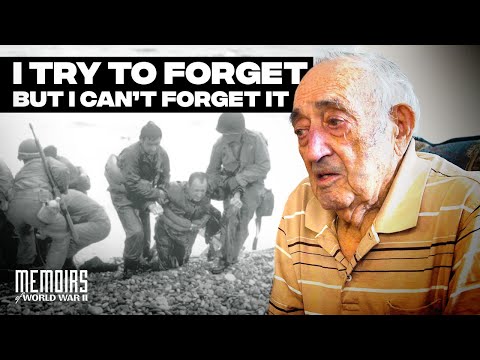
“For one thing, it took place during World War II and World War II occupies a very important place in the American story,” Moser said.

“It’s that rare instance of a war that appears to be totally justified and in which the moral lines were absolutely clear. I don’t think any reasonable person would argue that the world would be better today if the Axis powers won World War II.
“I think another aspect of it is it was the largest amphibious operation in the history of the world. The second closest was the British invasion of New York in 1776 and that wasn’t even close,” Moser said.
“So it was this is a massive amphibious invasion, the likes of which we will probably never see again.
“And just the sheer odds that that U.S. forces faced in that,” he said.
