
(First in a series)
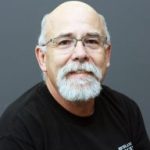
MANSFIELD — Adrian Ackerman is a data person, comfortable with numbers and their analysis.
That helped pique the interest of the City of Mansfield’s development director earlier this year during an internet training conference involving the City of Kettering, a suburb of Dayton.
Officials in the city of 57,862 residents discussed how they handled federal funding from the U.S. Dept. of Housing & Urban Development, a topic near and dear to Ackerman’s heart.
It quickly became apparent Kettering and its combined planning and development department did things differently than Mansfield, which has separate offices for community development and codes & permits.
In that Montgomery County community, those functions are rolled into one office, a conversion Mansfield City Council is expected to vote on later this month.
Part of the reason to consider the change was identified by local residents during Richland Source “Talk the Vote” sessions in 2021, ideas that were rolled into the Citizens’ Agenda presented to local leaders 11 months ago.
Things like affordable housing and enforcing housing standards were popular topics.
One resident specifically suggested, “Community development and codes departments should work hand-in-hand to address current issues and plans to move forward.”
The webinar helped plant the seed with Ackerman, who would head up the combined department.
“That’s how I initially looked into it. And then I started realizing that many other agencies, actually most other agencies, from what I can tell, function with their codes and community development or economic development or some collaboration of those departments working hand in hand as one department,” Ackerman recently told Richland Source.
As City Council discusses and decides on the realignment, Richland Source spoke with Ackerman about the proposal, how it works elsewhere and what it may mean for the City of Mansfield:
Richland Source: When you looked at Kettering, and other communities like Lakewood and Lima that have these combined departments, what have you found that works better for them? What doesn’t? What needs to be tweaked?
Adrian Ackerman: “We don’t have the same structures those agencies have right now, as far as staff composition and things like that. But I do intend to look into those more deeply once I have a better understanding of the current functionality of everything and how we need to blend together initially to make everything work.”
Richland Source: Talk to me about Kettering. You said it has tied HUD funding into the combined office. When did they combine their offices?
Adrian Ackerman: “I am not sure. It was actually kind of a shock to HUD that we are kind of a standalone department with no general fund assistance the way we function currently. But it was never presented to us that this other model is how other places function. So I’m not sure if that’s just how, when they received their funding, they formed their initial department or if that was a later thought.”
Richland Source: What makes it work for them in these other communities?
Adrian Ackerman: “I think due to such significant overlap — community development and CDBG funding and HOME funding are so closely tied to development.
“We can do new construction, rehabilitation, the infrastructure projects like we have at the West End. But so many of those elements still require permitting and, of course, inspections by specific inspectors, plan approval even.
“And it makes it more of a one-stop shop for those items, especially when it comes to contractors. We use the same contractors as Codes, yet currently we still have two separate registration systems. Of course, community developments doesn’t cost anything. We just have to ensure that those contractors meet the HUD requirements.
“Ideally, we’ll be able to merge those a little bit (and) open up the community development contractor pool a little bit since we’ll have direct access to the Codes (contractors).”
Richland Source: If I am looking and thinking about it right, community development is primarily a funding arm, through HUD and CDBG money, and Codes & Permits is more enforcement? Does that sound right? Are we marrying the funding with enforcement with this combined department?
Adrian Ackerman: “Traditionally, yes, correct. Right now, as part of the West End target area, we do have a targeted code enforcement program, where we essentially reimburse Codes for doing this.
“Now with the department merger, we’ll be able to track our time, the department as a whole. Once we’re one department, we’ll all be able to track our time and we won’t have those extra steps internally either to ensure that everything is taken care of. It’ll all be handled at once.
“There’s opportunity for billing certain elements of inspections and things, directly to the HUD grants. That has the potential to alleviate some of the general fund and free up funding for other options, whether that be equipment that Codes personnel could need, or even additional Codes personnel long term.
“That is going to be the goal, to ensure that the efficiency is there that we need.”
Richland Source: One of the things City Council members have talked about is the lack of personnel in Codes & Permits to do inspections and investigate citizen complaints. With this merger, will there be more personnel and how will that shake out?
Adrian Ackerman: “It will be continually evaluated. Obviously, everything that we do at the city is driven by the budget and available funding. We do have some things in the works that have the potential to create additional revenue. But we also are hoping that the combination of being able to use some of that staff time on grant funding will alleviate enough that we can hopefully increase the personnel.
“Initially we’ll look at, of course, just basic efficiencies. Are there gaps in how we’re functioning that we can fill with what we currently have to increase that efficiency there? (Even) if it’s just a basic reporting system or tracking things differently.
“I’m not 100 percent familiar with exactly how they’re doing that right now, but that’s certainly one of those items that we’ll wanna look at. There may be just basic tools that can improve that productivity and free up the ability for them to do that more efficiently.
“We obviously don’t have the comparable pay scales to (Kettering) or the ability to expand our staff as much as those other cities have. Some of these other agencies have 20-plus staff to run the merged version. We know the city is not equipped to do that at this time. But as we move forward and develop things, we will look at how they’re able to do that and hopefully be able to build up the capacity internally.
Richland Source: One of the changes would move management of demolitions in the city away from the Richland County Land Bank back under the city’s guidance. How crucial is that part of the plan?
Adrian Ackerman: “Either way, it’s going to going to continue to work. The Land Bank has done a phenomenal job. They’ve been a phenomenal partner, with the city. That wasn’t really part of my decision making, to take that part back in-house.
“But I functioned as the finance person over the demolitions when we initially started doing them. So I am familiar with the process and how it has to work. I don’t foresee any major issues with us taking it on. I’m hoping it can still just be a fluid process … just one agency versus another, moving the process to a different building.”
Richland Source: Are you worried about any message it may send across the street to the Land Bank if the city does pull back management of demolitions?
Adrian Ackerman: “Absolutely not. I’ve actually spoken with pretty much everyone who’s a decision maker over there. They have all offered their full support and assistance for anything that we need if we run into any issues.”
Richland Source: In your dealings with HUD, or when you look at the Kettering or other communities with a similar combined office, are there are any data points or qualitative measures that show this is a better system?
Adrian Ackerman: “I think a lot of times it’s based on the specific agencies. So Kettering, while they are HUD-funded, has a low-income population that qualifies them for that funding. They have a much different economic dynamic there than we do.
“We could compare Lima. While they’re slightly different from what we’re doing, it’s very similar. I think it’s going to just matter what’s going to work for us long term.
“We currently have the (countywide) housing study going on. It’s really diving into some of the things that are potentially hindering development. With a lot of these things that are gonna be coming out, probably in the next two months, I’m hoping we’ll be able to cater something that’s going to work best for Mansfield moving forward. But the initial model, of course, is based off of things that clearly are working for other (cities).”
Richland Source: A year from now, how will you know how successful this merger or combined combination has been?
Adrian Ackerman: “That’s something I’ve been trying to think about because I’m a data person. I like to pull numbers. It kind of depends on what those numbers look like initially if this gets approved.
“That’s the day I want to pull some numbers on things like violations, open violations, violations pending in the courts, things like that with the Codes Department.
“We’ll look at how many rehabilitations the Community Development department was able to accomplish over the last two years. It’s been kind of complicated with COVID, to see if being able to have that more direct contact with contractors affects our bidding and the number of bids that we get on our projects.
“And then of course, being able to see if we’re able to clear violations quicker, if there’s any way that we can improve the plan-approval process that makes that a little more streamlined for developers. And I imagine some of that will be just general feedback from those who use both departments consistently.”
Richland Source: One of the things residents during “Talk the Vote” complained the most about was Codes & Permits and a lack of enforcement. How challenging will it be to change peoples’ minds, that this new concept will work?
Adrian Ackerman: “Some people don’t know my background. I came from the police department. Complaints are what my history is rooted in. I am not afraid of the complaints.
“The reality is that the vast majority of what Codes and Permits does is rooted in the laws and the regulations. There’s a lot of timing issues with how they function and I think that’s where a lot of the complaints come in.
“We can go out and put a violation on a property, but we may not be able to act on it for 10 days or 30 days or 60 days. So it does seem like nothing’s getting accomplished right now. Whether any of those regulations are something we can look at adjusting to have quicker action, that’s of course something we can look into.
“But a lot of what they do is also regulated by the state. So there are some things that we are unable to change. There are some things that are rooted in just the criminal law that are out of our hands as far as enforcement goes.
“Working to collaborate and make sure all of those pieces function together is going to be our best effort. But I also think we really need to make an effort to educate the public when there are complaints like that on how the process works and what our restrictions are.”
Richland Source: Let’s use the former Kingsgate Cinema and properties at Westgate as an example. How do we get to a point where buildings vacant for 20 or 30 years and are literally falling in on themselves? How do we stop that deterioration?
Adrian Ackerman: I don’t have an answer for how that’s occurred over the last 30 or so years. But realistically, I think we have to take a more proactive approach to managing our structures, period.
“We’ve looked into several ways to do that. And I think part of this housing study may pinpoint some of the concerns, some of the data that’s coming out about overall vacancies, just housing vacancies.
“Some of that data’s a little eye opening. We’re going to be moving forward looking at how to potentially solve that and potentially incentivize investment. We just have to figure out what we can reasonably manage and … oversee. It doesn’t do any good to make a change that you can’t enforce.”
Richland Source: It seems pretty clear that HUD thinks this kind of combined office is a good idea?
Adrian Ackerman: “HUD was always concerned with Mansfield for the fact that we did not have additional general fund dollars. They really viewed our struggles. It just wasn’t a possibility, at least since I’ve been in the department. Coming out of fiscal emergency, of course. you just don’t have that extra.
“And while we’ve always been aware that it’s a concern of HUD’s that we don’t have the additional support to run the programs, I spoke with our HUD rep after this was brought up as a possibility and he is completely on board with it. He said it’s normal to function that way. He gave me a little bit of direction to ensure that we have the appropriate separation and (how) have the HUD grants billed appropriately. But overall, complete support.
“(The city can’t use HUD grant money) that’s not tied to a HUD program. Now, if it is tied to a HUD program, such as an emergency homeowner rehabilitation that we do … then we can pay for that staff time to do that.
“That’s where some of the budget may be eased. We’ve had a project recently where one of the inspectors has probably been out to the property five or six times to make sure everything’s correct. But in those instances, it’s not as much of a drain on the Codes Department, other than some time, because you’re obviously compensating for that out of the grants.”
COMING NEXT WEEK: What are cities like Kettering doing with combined development and codes/permits offices?