
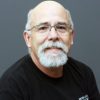

MANSFIELD — Joe Trolian and Melissa Stone are on the same page when it comes to trying to assist homeless residents, though they work in cities nearly 300 miles apart.
Rather than trying to impose solutions on the unhoused population, why not spend time trying to find out what it is these residents need?
And then, work to connect those needs to resources readily available in the community.
That’s the goal of a homeless pilot project launching Monday, May 2 in Mansfield/Richland County, an effort spearheaded by Trolian, the executive director of the Richland County Mental Health and Recovery Services Board.
“A lot of people like us have been making decisions about what (homeless) people need and not enough asking, ‘What do you need?’ ” Trolian said during an April 28 county commissioners’ meeting to formally launch the year-long pilot program.
The topic of a growing homeless population was one of those identified during the Richland Source “Talk the Vote” community meetings before the 2021 general election.
It became part of the Citizens Agenda the Source presented to Mansfield City Council in January.
This is the second topic from that agenda we have explored. Previously, we took a deep dive into issues considering local public transportation.
Next up is a look at concerns about affordable house in Mansfield and Richland County.
The Bloomington Story
The program is being launched in the same spirit as work done for the last few years in Bloomington, Ind., where Stone is a senior social worker in that city’s police department.
The effort in the southern Indiana city of 84,000 residents began to assist homeless residents in 2015 with a specialized team of downtown resource officers (DRO).

As seen in Mansfield, the DRO team was formed after businesses and residents in downtown Bloomington — a city that’s home to Indiana University — began to express concerns about growing numbers of homeless residents in the area.
These officers, dressed in white polo shirts, are often on foot in the downtown, proactively encountering homeless residents, establishing relationships and trying to assess their needs.
“The city had seen lots of homeless residents beginning to congregate in the downtown and it was becoming a major problem,” said Stone, who joined the department as its first “embedded” social worker in 2019.
“The city didn’t want the downtown to look like that and that’s why it started the downtown resource officers program. These officers have developed a really good relationship with the unhoused population.”
The effort boosted the situation downtown as officers helped link homeless residents to needed community services — such as obtaining food and shelter and beginning the road toward permanent housing and employment.

But it may have also helped lead to greater numbers of homeless relocating elsewhere, including in small camps in the woods and other rural areas of Monroe County.
Like Mansfield, Bloomington is “known” for its social service resources, which may help attract unhoused residents in need.
Stone, a Licensed Social Worker with a master’s degree in social work, came aboard as a police social worker (PSW) when the department sought to expand its homeless outreach team. The goal was for her to work on calls and cases related to unmet social service needs.
Stone, along with two additional PSWs hired since she started, has helped the BPD reduce the number of repeat calls, many involving the homeless. She has also helped to build community partnerships and expand the department’s internal training program.
“Sometimes (PSWs) ride along and take calls with officers. But a lot of the work we do is more proactive outreach,” Stone said. “There are a lot of organizations here who have outreach workers. We get together and work with them, build rapport (with homeless) and see if they need anything.”
She believes some residents come from outside Bloomington and Monroe County into the community because it has services not available in other nearby locations.
The Bloomington PSWs do more than work with homeless, however.
“Often, we take referrals from our officers who have dealt with the immediate needs of a situation. We will follow up with the residents involved in the incident later, help get them connected to needed resources.”

The Mansfield plan
A public/private partnership pilot program to help homeless residents in downtown Mansfield was announced in February, featuring teams of behavioral health professionals and law enforcement officers.
It’s an effort that began in the summer and fall of 2021 — when officials noted an uptick in homelessness across the county, particularly in downtown Mansfield and around the (Central Park) gazebo.
Richland County Commissioner Tony Vero helped helped form a group to discuss the issues, including Trolian and leaders of local public and private agencies.
In the program, behavioral health professionals from Catalyst Life Services will be joined by Mansfield police officers during three, 4-hour shifts per week to proactively contact homeless residents.
The teams will visit homeless in the downtown area, as well as stationary sites like the Harmony House Homeless Services shelter, Crossroads City Center, the food shelter on Bowman Street and elsewhere.
The local Mental Health & Recovery Services Board will fund the mental health workers from Catalyst, which Trolian estimated at about $70,000 for the year-long project.
He said funds will come from local tax levy dollars.
“We want to say thank you to the community for this support, which allows us the flexibility to do some creative things,” Trolian said.
“If you’re needing to be seen medically, if you need some mental health assistance, some addiction assistance, housing assistance, need a meal … we’ve got the services here,” Trolian said.
“People are coming to our community because it has been very welcoming. So what we’re hoping to do is really have an opportunity for people to sit down and have a conversation. Sit down and and actually ask somebody who’s currently unhoused, ‘What do you need?’
“I think people will be very surprised with what they hear,” Trolian said.
The Richland County Foundation will fund the off-duty police officers, who have signed up for the special details. That grant is about $50,700, according to Brady Groves, foundation president.
“We are pleased this group came together. They were in need of some resources and our board awarded the grant to provide the needed legal resources,” Groves said.
In conjunction with the effort, Mansfield Mayor Tim Theaker said small signs will be posted in Central Park stating it’s against city ordinances to sleep or camp in the park. Theaker said he hopes the signs will help to deter people from trying to stay in the park overnight.
The year-long program will be divided into two phases. An evaluation of the effort will be done this fall and adjustments can be made, according to Trolian.
Erin Schaefer, executive vice president/executive director at Catalyst, said social workers from her agency have experience working with local law enforcement, including training of officers.

“We work pretty cooperatively with police. We often times have to call an officer if we have somebody who is struggling, who we know we’re gonna have to hospitalize, but we also know that it’s not necessarily gonna go well,” she said.
“We work pretty cooperatively already with both the Richland County Sheriff’s Office, the Mansfield Police Department and other law enforcement agencies around the county.
“So for us, it’s not really a stretch to work with them and to have those relationships,” Schaefer said.
She said the duos will work together in determining how best to approach a resident who appears to be in need.
“I think it’s gonna depend on who might know the person. I think some of the people that we encounter are gonna be people who are familiar to either the staff who goes out or to the officer.
“So for me, it makes the most sense to have the person who might already know the person to encounter them,” she said.
“If we know that the person already has been a client at Catalyst in the past, maybe they haven’t been here for a while, to just start with an introduction of, ‘Hey, my name’s Erin and I am from Catalyst. We’re just out here checking up on people to see how you’re doing, see if there’s anything you need’ and then start from there.
“It could be that the officer is well aware of somebody and already has that relationship,” Schaefer said.
She said the Catalyst workers in the field will be able to do diagnostic work with the homeless they encounter.
Mansfield police Chief Keith Porch said the initial duos will likely start out working on weekdays, though that could change into evening hours as the program moves forward.
“It’s really gonna be fluid. To give you a specific date and time, right now, on when the team is going to be out working, I could not do that,” Porch said.
The chief said the program is similar to the Opiate Response Team established a few years ago to respond when residents overdose on drugs. In those instances, social workers and officers respond to a residence to offer assistance to the drug user once the crisis has passed.

“(In this homeless program), the officer is there to act as security for these types of interactions and for the officer to build relationships with the homeless population,” the chief said.
“There are a multitude of factors that go into how somebody becomes homeless — mental health, maybe drug addiction. In my mind, the first priority is for that social worker and the police officer is to build relationships with the homeless population.
“As with anything, if relationships are built, then they are more apt to receive services, or at the very least, we can direct them to services. We are fortunate in Richland County to have the services we do to be able to aid the homeless,” the chief said.
“I want officers to interact with the population to get to know them. Put a name with a face and build relationships. At the end of the day, that will pay dividends,” the chief said.
“It’s a pilot program. Of course, we all want to see results. But at the end of the day, if it doesn’t produce what we want, at least it’s a foot in the right direction.”
In Bloomington, Stone said she likes the ideas behind the local pilot project.
“I love the idea of putting the social workers and officers together,” she said. “The key will be how much follow-up work is done.
“Once the encounter is done and any de-escalation that needs to take place, social workers need time to do very intensive case management behind the scenes to actually help someone long-term.”
Trolian said he has high hopes for the project with the many different partners involved. A big reason for that is a strong series of public-private partnerships that have been established in the community over the last 20 years.
Simply put, something on this scale could not have been attempted in the past.
“We’ve kept everybody at the table. It wasn’t just a county commissioner calling two department heads and saying, ‘You guys figure this out.’ We pulled non-profits in. We pulled business owners in. We pulled the Chamber of Commerce in.
“We were talking with everybody because we really wanted to do something that was gonna be effective and we wanted to do it very publicly.
“I say that because typically the majority of the work that we’ve done with the homeless population, from the behavioral health side, nobody ever sees it happening.
“When we’re not doing it is when you start seeing more problems on the street. It’s kind of our job to stay ahead of that, to be more proactive, to check in with our folks that we know traditionally, like to be on the street more often, and make sure they’re OK, make sure their needs are being met,” Trolian said.
“Even if they don’t want to stay under a roof, we want them to at least be healthy if they’re gonna be on the streets.”

Where can I donate plastic homeless mats?