

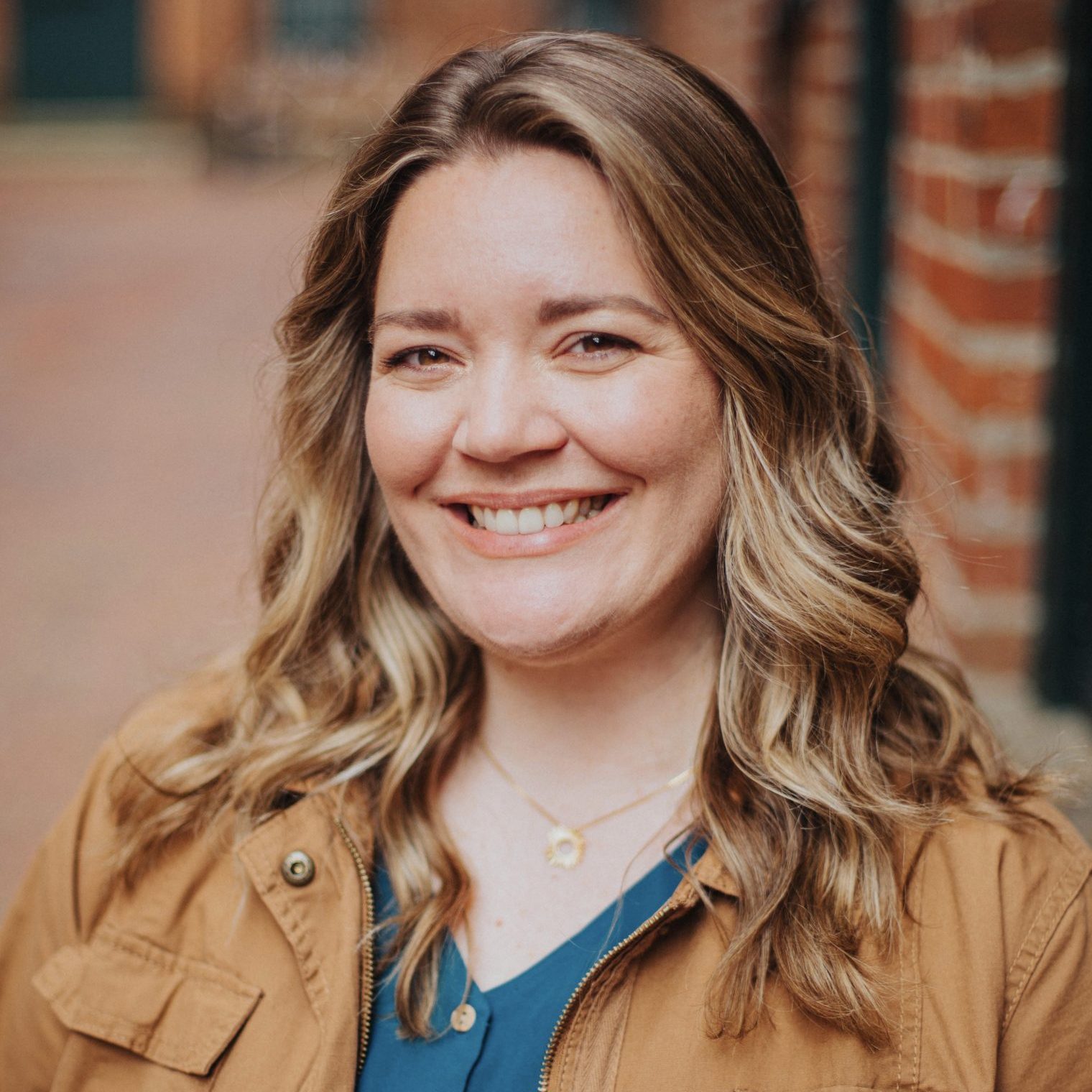
MANSFIELD — Amy Hiner’s 3-year-old son has been on a waitlist to acquire care for more than half his life.
Hiner works part-time at The Ohio State University in Mansfield, while her husband works full-time as the regional president for Park National Bank. But she discovered part-time openings are limited in most early learning centers, with preference given to full-time clients.
Family care was not an option, as the Hiners are not native to Richland County. One set of grandparents lives an hour away, while the other set lives two hours away.
Through word-of-mouth, Hiner found two different in-home settings for her son with people she trusted, but who were not licensed providers. Meanwhile, her son stayed on the waitlist for a high-quality center for more than two years.
It was this lived experience, in addition to countless other similar experiences for families in north central Ohio, that made Hiner passionate about the issue of child care in our community.
“If we want to change the future of our community, we absolutely have to make child care a priority,” said Hiner, chair of the Women’s Fund at the Richland County Foundation.
That’s why Source Media Properties is partnering with the Richland County Foundation and other local funders to publish It Takes A Village: Why Child Care Is Everyone’s Business.
This solutions journalism project starts today and will investigate the child care crisis in our tri-county region of Richland, Ashland, Knox and beyond.
THE CHILD CARE ECONOMY
Eight years ago, the Women’s Fund commissioned a survey that asked what women need to be economically stable in Richland County. Child care emerged as one of the core barriers to that success — but this problem isn’t unique to our region.
According to a report from the U.S. Chamber of Commerce Foundation, Ohio’s economy loses $5.48 billion each year due to insufficient child care coverage. In addition:
- Child care-related employee turnover and absenteeism costs Ohio’s employers an estimated $3.97 billion per year.
- Ohio misses an estimated $1.52 billion annually in tax revenue due to child care challenges.
- 70% of parents of young children missed work or class at least once in the past three months for child care-related reasons.
“Investments in reliable, high-quality child care would be a game changer for women and for our economy,” said Amy Goyal, vice chair of the Women’s Fund at the Richland County Foundation.
According to research from Groundwork Ohio, a statewide policy and advocacy organization, such investments have a return rate of 13 to 1. The payback lasts far beyond the numbers: Economic stability is one of the most powerful predictors of a child’s long-term well-being.
The U.S. Chamber of Commerce Foundation report also showed that children who are given appropriate child care perform better in school, are less likely to drop out, and achieve higher test scores.
“When we start to think of it as a collective responsibility as a community, that’s where we can make change,” Hiner said. “Because honestly, we will pay for this one way or another if we don’t decide to make these investments early.”
EARLY CHILDHOOD DEVELOPMENT
The benefits of investing in high-quality child care start at birth.
According to ZERO TO THREE, a nonprofit focused on the healthy development of babies and toddlers, a child’s brain between those ages is developing 1 million neural connections per second.
In fact, research shows that a baby’s earliest relationships with parents and other caregivers dramatically influences their brain development, social-emotional and cognitive skills, and future success in school and life.
“If you’re caring for a baby and you’re making eye contact with that baby and cooing, and the baby coos back at you, of course that’s cute,” Goyal said. “But what’s happening in that baby’s brain is laying the foundation for the cadence of speech.
“You’re building a social and emotional foundation,” she said. “The brain science says there are these interactions and stability of relationships with caregivers in these early years, and you cannot get that time back.”
Hiner said the benefit of access to high-quality care means a family has access to skilled workers with professional training, who know the social, emotional and language pieces of child care and can advise parents on early interventions, if needed.
“As a community, we need to invest in our youngest minds,” Hiner said. “When we do that while their brain is developing, in two decades, they’re going to be higher-skilled workers that bring higher-income jobs to our area.”
THE CHALLENGES
In 2024, the Women’s Fund went through a year-long strategic planning process to recommit to the issue of child care and how to make a meaningful impact.
Goyal said part of that planning process was asking, what are the needs and where are the gaps? They discovered challenges around access, affordability and quality.
And that’s just scratching the surface.
Research from Groundwork Ohio shows that having young children in a household makes a family four times as likely to live in poverty. According to Goyal, 59% of the households living in poverty are headed by women.
“Female-headed households are disproportionately likely to live in poverty,” she said. “Undeniably one of the factors contributing to that is access to quality, affordable child care, because when women disproportionately share that burden, they will have interrupted participation in the workforce.”
There’s also the perception that child care is simply a family decision, she said. And while it is a deeply personal decision, the impact is community-wide.
“I personally, firmly believe that parents should have the autonomy to make the decisions that are best for themselves and best for their families,” Goyal said. “And one way to do that is to ensure that there’s a robust infrastructure around them, so they can make those decisions based on what’s best rather than what’s necessary.”
Hiner believes that child care should be treated like a public good — a necessary infrastructure the same as roads or bridges.
“When we treat it like infrastructure, it helps children get those neural connections they need to be highly successful adults,” she said.
“It helps parents be able to participate in the labor force, and it helps employers because now their workers are present and focused on their job. It helps the whole economy of Richland County.”
WHAT COMES NEXT
Throughout this series, our publications at Source Media Properties will tackle a variety of topics surrounding the issue of child care, including:
- How child care impacts the economy.
- How child care impacts children.
- How a lack of child care impacts real families.
- The economics of early learning centers and at-home care.
We will investigate the gap between prioritizing children yet a lack of funding at the state level. We will explore who’s doing it right, and what we can learn from them. Most importantly, we will talk to real people who are affected by this issue.
That’s where you come in.
Click here to fill out our community survey and tell us more about your encounters with child care in north central Ohio.
Your lived experiences matter just as much, if not more, than the research and expert interviews that will be part of this series.
For Amy Hiner, her lived experience has a happy ending. Her 3-year-old son was finally accepted to their preferred early learning center, and he begins there this fall.
As for the name of this series, that’s an easy one: Nobody can do this alone.
Even the National Institute of Health published an article acknowledging it takes a village to raise a child. The phrase originates from an African proverb that conveys the following:
“It takes many people to provide a safe, healthy environment for children, where children are given the security they need to develop and flourish, and to be able to realize their hopes and dreams.”
“We’ve all heard the saying ‘it takes a village,’ and some of us are fortunate to have family and extended family and to have a village — but not everybody does,” Goyal said. “So let’s build that village, especially if we’re going to say it.”