


MANSFIELD — It happened to Bob Gunton in the South American country of Chile.
It happened to Mark Rolston in Rome.
And it happened to Gil Bellows in Vancouver.
Each of the actors told stories Friday afternoon about being recognized in other countries for their work in the iconic 1994 “Shawshank Redemption” film, primarily shot at the Ohio State Reformatory and other Mansfield and Richland County locations.
The trio were among about a dozen of the cast and crew members who participated in a panel discussion before a packed house on the stage of the Renaissance Theatre in Mansfield as the local 30th anniversary celebration weekend began.
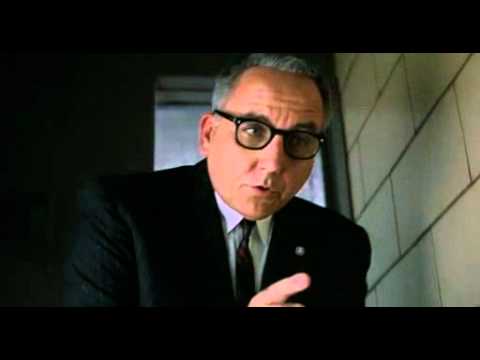
Gunton, who played Warden Norton in the film, recalled working on a role years later in Chile and asking a man on the street for advice on finding a good, local restaurant.
The man looked at him and said, “You’re Bob Gunton … or am I being obtuse?” he asked the surprised actor, using one of the warden’s more well-known lines from the film.
For Rolston, he was on vacation with his family in Italy. They were walking late at night and encountered a group of young men on bikes. The actor who played the brutal Bogs Diamond in the film feared he and his family may be in danger.
But then one of them spoke, “Signore … Shawshank Redemption?”
Bellows was in a restaurant in Vancouver when he noticed a family at another table looking at him.
“The kids were looking at me. The wife was smiling. The husband asked me if I was an actor. I said ‘yes.’ They had recognized me (from Shawshank),” Bellows said.
“That’s one example of the hundreds and hundreds of times that has happened to me. It’s why as a kid I dreamed of (being an actor) and why I am eternally grateful,” he said.

(Click here to see a complete list of all “Shawshank Redemption” 30th anniversary events.)
(Below are photos from the “Shawshank Redemption” cast and crew discussion on Friday at the Renaissance Theatre in Mansfield, a conversation guided by Ben Mankiewicz, an American television journalist and host for Turner Classic Movies.)


Others participating in the panel discussion were director Frank Darabont; executive producer/production manager David Lester; location manager Kokayi Ampah; William Sadler (Heywood); Scott Mann (Glenn Quentin); Alfonso Freeman (young Ellis Boyd — Red); Mack Miles (Tyrell); Claire Slemmer (bank teller); and Paul Kennedy (Food-Way manager).
Before the panel discussion, members of the cast and crew met with media members in The Ghostlight Lounge on the lower level of the Renaissance.
Below are highlights of some of those conversations.
Bob Gunton — Warden Norton
“There were very few actors who didn’t know something about this movie. When this script was being circulated, everyone wanted (to be in it),” said Gunton, who has also returned for the 20th- and 25th-year anniversary celebrations.
“They had a lot of names (for potential actors to play the warden). But I had some stuff going for me, which is I can play younger me and older me, which I did.
“(Director) Frank (Darabont) wanted me right away, but the studio that made the film said, ‘I don’t know. He has a theater career, but I don’t know.’
“So they flew me to New York for a screen test and they were able to get Tim (Robbins) to read off camera for me, so I’d be really talking to the guy and that did it for me,” Gunton said.
“What is amazing to me is how this has become … anybody coming (to OSR) is like making a pilgrimage. It is a revered spot for thousands of people.
“I tell them that this is in effect a local business and that each time I come back, it is more interesting and refurbished a little bit. I’m astounded and I like to come back because it’s my way of paying back in a way to the movie, even though, I get lots of residuals from it.
“It was one of the best things I’ve ever done and I like to remember it that way.
“I kind of wandered around before we started shooting and went to one of the cell blocks and you could smell the terrible sadness and violence in there. I’d peek in the cells and there’d be some writing on the walls, and it wasn’t the men’s room obscenities. It was like, ‘I miss you, mom’ and things like that.
“I looked at the walls and it seemed like there was scratches from (someone’s) hand and looking at the (prison graveyard), it gave me some sense of what a terrible place of tragedy and the loss of any hope.
“It was just so perfect for how the movie unravels and unwinds. The prison is a character in the movie.”
Gil Bellows — Tommy Williams
“The arc of (Tommy’s) character is kind of a full, complete (and) very dynamic arc, which is why the role is very impactful and all these really great young actors wanted to play it and I was lucky enough to get it.
“The experience of doing it is everything you dream about being as a young actor. You get to tell stories. You get to push the plot forward. You get to really participate in the building of the complete experience for an audience.”
“I took a lot of pride in being in (the movie) and I still do.”
“It’s all in the writing and Tim Robbins is, I think, one of the most underrated actors in cinema. He’s so fiercely intelligent and he doesn’t put anything on a character. He just really lets the character be.
“I think my, my expectation was Andy was gonna be big buddies with Tommy, but it was never that. It was more like the Tommy character was a project to Andy — a way to take his skills and use his time to allow for something positive to take place. He was giving Tommy the potential to see a full life.
“I thought it was a really beautiful dynamic and I loved working with Tim in that way and, and clearly, you know, audiences love the experience.”
William Sadler — Heywood
“It’s been 31 years since we filmed it. And it’s great to see everyone again. Everybody’s older, everybody’s creakier, but it’s wonderful to see them all.
“It’s hard for me to get my head around how the movie has grown over the years in the minds and the hearts of people around the world. It’s taken on a life of its own in a way that I don’t think any of us expected.
“The scene that sticks out in my memory the most is when James Whitmore is holding the knife to my neck and he didn’t want to touch me. The knife was dulled. They had ground the blade off. You couldn’t cut butter with this knife, but he wouldn’t (touch the knife to Sadler’s neck).

“They painted a little blood on my neck and he’s got his arm there, but he wouldn’t get the knife close to my throat. He just wouldn’t. Frank is saying it’s OK. We had to talk him into it.
“It was really lovely. He was just worried. ‘I’m an old man and you’ve given me a sharp thing to put in this actor’s throat. I don’t want this responsibility.’
“I have to say it when the writing is that good, and we all knew the writing was that good, and you’re acting with James and Tim Robins and Morgan Freeman … everybody brings their ‘A’ game. I think that’s what happened.
“It was like we all were sitting around that table, the dinner table, and you could aim the camera at any face. Everybody was on that big (high) for every single moment.”
Kokayi Ampah — production supervisor/location manager
“They had already chosen the main site, which was the Reformatory. So my job then as location manager was to find all the other locations around it within a 30-mile radius.
“Find the tree, find the wood shop, find the laundry, find everything else.
“The hardest two locations to find for us was the tree and grocery store. The tree … because it couldn’t just be any tree. Frank and I had the conversation almost every day … ‘Have you found the tree?’ One of my assistants finally found it.

“We were looking for the store and just couldn’t find it. I was going to a meeting with one of my assistants. We were a different way from our office. About two blocks from our office, we found the store. It was basically the last (shooting) location we found.
“I’ve done a lot of films and I’ve seen a lot of films and a lot of films have locations that do (tourism events). But I don’t think (any do) to the extent of this film. For over 15 years, it has been No. 1 of all-time films on IMDB. That’s amazing and it’s amazing to think that I had the blessing of working on this film.”
Ben Mankiewicz — TV journalist and host of Turner Classic Movies
“I think like every great piece of art, every great movie, there’s no time limit (on how long it can endure). This is a love story we don’t see very often … between two men. It’s not physical, but there is nobody more important in the other’s life than each other.
“They thought they had a pretty good movie but people didn’t see it (in the theaters). Maybe it was too long. The name was weird … we don’t think of it as weird now. But it just didn’t resonate. The Oscar (nominations) helped to save it.
“Then it has this burst of rentals on VHS (in 1995) and then it’s really saved by television. So in that sense, that’s probably not going to happen anymore to any movie … being saved by commercial television since it’s largely going away.
Mankiewicz compared “Shawshank Redemption” to the “Wizard of Oz” and “It’s a Wonderful Life,” both of which became popular through commercial television.
“Television told people how special this movie was because as an audience, we largely missed its greatness the first time.”

Ben Mankiewicz
Does he take pride in working for Ted Turner, who owned the networks that elevated “Shawshank Redemption?”
“It’s stupid. But yeah, I do have some pride. I had nothing to do with it, but I feel like I read, Ted Turner buying Castle Rock and then putting it on TNT as often as it was. I’m exactly the right generation of the people who were all flipping channels and saying like, ‘Oh, Shawshank.’ It doesn’t matter where in the movie you come across it … you’re staying until the end.”
“I feel strangely proud of that … to be at this network that saw the value in this movie.”
Does he have a favorite scene?
“The little four minutes, I don’t know how long it is, I’m guessing four minutes, of James Whitmore out in the world, which almost could exist as a little movie all by itself. Old man gets out of prison and can’t cope. This narration is beautiful.
“I’m not a big fan of narration in movies because sometimes it’s telling you what you ought to be showing us. But both Morgan’s narration and Whitmore’s narration in this … they’re amazing.
“That little four-minute scene, which breaks your heart every time you see it, because he’s not even sad. He’s pleased that he’s making a decision. ‘I’m not going to hang around anymore. This is not for me.’
“And it’s that moment. He’s just lonely, can’t cope … it’s beautiful … and that’s all Frank (Darabont). That was not in (Stephen King’s) book.


