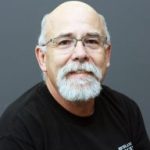
MANSFIELD — Phil Messer knows what it’s like to try to protect the life of a U.S. president, helping to do just that when President George W. Bush came to Mansfield in 2004.
Like millions of Americans, the retired Mansfield police chief watched television news on Saturday evening after a would-be assassin tried to kill former President Donald Trump during a campaign rally in western Pennsylvania.
And like many, he wondered how such an attempt could be possible with the gunman opening fire with a rifle from the roof outside the perimeter established by the Secret Service, about 400 feet away.
On Sunday, the FBI identified the shooter as 20-year-old Thomas Matthew Crooks of Bethel Park, Pa., which is located just outside Pittsburgh.
“I think it really all comes down to what you do, in government or in business, it’s a matter of resources and how many visits are planned, their resources are stretched,” Messer said.
“It’s probably not good to say, but it’s almost impossible to cover every single one of those high-ground scenarios,” he said.
“It comes down to how many people do you have and trying to be reasonable within the limits of the resources or the assets that you have available,” the former chief said.
The Secret Service office responded Sunday to criticisms of the Trump protection efforts. In a statement, the Secret Service said the detail had been increased recently.
“There’s an untrue assertion that a member of the former President’s team requested additional security resources and that those were rebuffed,” said Secret Service spokesman Anthony Guglielmi.
“This is absolutely false. In fact, we added protective resources and technology and capabilities as part of the increased campaign travel tempo,” he said.
The 70-year-old Messer served in the MPD for 34 years, the last eight as chief, before retiring in 2010 and spending a couple of years as the city’s safety service director, a time which also included a Mansfield visit from then-President Barack Obama.
During a Sunday morning interview, Messer said he recalled Bush’s campaign visit in October 2004, which included a speech at the Renaissance Theatre and meetings with Gold Star families.

‘They don’t let any stone be unturned’
Messer, who helped form the METRICH Enforcement Unit in 1986 and served as the first project director, said Secret Service agents came to Mansfield two or three weeks before the Bush visit to make security arrangements.
“First of all, the Secret Service is probably one of the most professional and detail-oriented organizations that I ever encountered in all my years in law enforcement,” he said.
“They just didn’t let any stone be unturned. They had teams that would talk to us about (local) people who may be politically active and negative in a sense. They wanted to identify (them) and they interviewed anybody within a certain mile radius of the city that had ever sent a threatening letter to the president or made any comments that they were aware of,” Messer said.
“They had different teams that did different things. They’re looking at all these protection details weeks ahead of time,” he said. “They have an insanely detailed plan for everything.
“But I think it comes down to what is humanly possible (in terms of protection),” Messer said.
“They did a good job at just scanning potential threats. They would stand where the president was going to be. They walked the route the president was going to walk, they drove the route the president was going to drive,” Messer said.
“From their perspective, they tried to secure every potential spot where a negative actor could be,” he said.
He said the Secret Service agents set up rings of protection, including counter-snipers on rooftops, and utilized local enforcement officers on the outer edges of the perimeter.
Even in a city the size of Mansfield, he said, there was no way for the Secret Service to be on every rooftop in the downtown.
“There just wouldn’t be the resources for something like that. But those counter-attack teams (CAT) positioned themselves where they could see all of these potential threats.
“It wouldn’t be reasonable to think you can place a law enforcement officer or a Secret Service officer on every rooftop,” he said.
‘You’d better be right or you could end up in prison’
He said it’s likely local law enforcement officers, in communication with federal agents, had responsibility for the outlying buildings in Butler, Pa., on Saturday evening.
“My guess is the (Trump) shooter probably got onto the rooftop after the speech started because they would be able to see (that) rooftop from their position because they usually take the highest position,” he said.

On Saturday evening, videos showed the counter-sniper apparently looking at Crooks through the scope of his own rifle. But he didn’t shoot until the alleged gunman opened fire with his own rifle, squeezing off five or six shots and wounding the former president.
The counter-sniper then killed Crook, authorities said.
Messer, who served in the U.S. Marine Corps, said he didn’t have an issue with the counter-sniper’s delay.
“Probably the most stressful decision that law enforcement people, the average (cop) on the street in a village to a metropolitan city, is the ‘shoot/don’t shoot’ decision.
“In a case like that, are you sure it’s not a spectator? Are you sure it’s not some media person with a long-range lens trying to get a good picture?
“You really have to be cautious and be sure that it’s a threat-target before you take that action. As you can imagine, these CAT snipers are the best of the best. When they pull the trigger, their target is probably down for good.
“I couldn’t imagine what what goes through their mind in the split second they’d have to make that decision. Sure, this suspect fired five or six shots, or whatever it may turn out to be. But he certainly would have had the capability to fire many, many more,” Messer said.
“The (counter-sniper) had a split second to make the decision to neutralize the assassin. But you’d better be right or you could end up in prison. That’s just the human part of law enforcement, regardless of the agency,” the former chief said.
‘You are a very expensive visit’
Messer said when Bush came to visit the Secret Service utilized city buses, dump trucks and other large vehicles to control the downtown intersections to help restrict access.
“They’re very creative in their plan to determine what they could use for barriers and take away the line-of-sight from people actually seeing the president,” he said.
The former chief said it cost the city “tens of thousands of dollars” during Bush’s visit to Mansfield, largely due to overtime pay during the advance work and officers called into duty during the actual visit.
“After the event, I met with him, got to talk to him, got pictures with him. He said, ‘I bet you’re going to be glad when I am out of here.’
“I said, ‘Mr. President, we’re honored you’re here with us. But you are a very expensive visit,'” Messer recalled with a laugh.
“(Bush) said, ‘For some reason, people just don’t like me,'” he said. “That’s when all of the Iraq stuff was going on.”
The former chief acknowledged the country has changed, even since the 2004 election cycle “in such a negative way.”
“We went from spirited political debate and trying to resolve things, now not through discussion and legislation, but with threats, and in some cases, violence.
“You just have to pray for the country because there are so many complex issues facing us today. I don’t know that I’ll live to see them all resolved, let alone most of them,” Messer said.