


SHELBY — Ryan Craft dreamed of doing two things as a boy growing up along Myers Road in Shelby.
“I wanted to win a Northern Ohio League championship in football and I wanted to be a jet pilot.”
Mission(s) accomplished.
“We got them both done,” the 42-year-old U.S. Navy pilot said over morning coffee at the Ivory Bean Coffee House during a recent visit home.
A 1999 Shelby High School graduate — and a 6-foot, 185-pound inside linebacker on the Whippets’ 1998 NOL championship team — Craft will end a 20-year Naval career in 2024, retiring as a lieutenant commander.
It’s been a career Craft loves, including getting married and having two children along the way.
But now he is ready to wear a different uniform on a full-time basis, flying 737s full-time for Southwest Airlines.
“I am ready,” said Craft, who has largely worked as a Navy flight instructor for the last several years. “I want to get back into the airline world.
“I am still very grateful. I love what I do in the Navy. But at 20 years, it’s time to hang up the hat, or the flight suit, whatever you want to call it,” he said with a laugh.
His path to this point is one that is pure Americana.
SHELBY BORN AND BRED
Though he has traveled the world as a Navy pilot, and is now stationed at Naval Air Station Meridian in Mississippi, Craft remains a proud Shelby Whippet at heart.
He wore number 51 when he helped spearhead the Shelby NOL title team, participating in a program turnaround led by new coach Steve Hale. The Whippets rolled through the regular season undefeated before falling in a regional title game.
“We were kind of not that great there in the mid 1990s. Then we got Coach Hale. We turned it around there in 1997 and 1998 and it was awesome to go out that way,” Craft said.
Much of his family, including his parents, still live in Shelby.

When opportunities present themselves, Craft still performs “unofficial flyovers” over his hometown.
One of those moments came Sept. 3, 2022, when the community celebrated the opening of its new football stadium.
Craft was on his way to participate in the Cleveland Air Show that weekend, representing the Navy. An unofficial flyover was perfect timing on that Friday night before a packed house.
As the band completed the final measures of the Star Spangled Banner, Craft roared overhead in the T-45 jet, delighting the Whippet faithful.

Craft had watched high school bands playing the national anthem on the internet to prepare for his effort. He knew the average performance time was between 60 and 70 seconds.
He arrived in the area and remained aloft “on station” at a distance he could not be heard by the crowd. He had folks on the ground communicating with him via hand-held radios.
Craft timed his route to arrive on time, though he had to give his aircraft a little extra juice near the end to make his roaring, aerial perfect entrance.
“That actually made it a better one,” he said with a laugh.
It was as a boy growing up in Shelby that Craft became interested in flying and in the military by going to air shows with his dad.
U.S. Navy Lt. Commander Ryan Craft has earned the following military awards:
- Air Medal (with bronze 5)
- Navy & Marine Corps Commendation Medal (with gold star)
- Navy & Marine Corps Achievement Medal (with gold star)
- National Defense Service Medal
- Afghanistan Campaign Medal
- Global War on Terrorism Expeditionary Medal
- Global War on Terrorism Service Medal
- Navy Sea Service Deployment (with bronze star)
- Navy Expert Rifleman (with silver E)
- Navy Expert Piston (with silver E)
“He was always interested in the military, not trying to push it on us, but he wanted to go to air shows.
“Just watching those planes in the sky and it was amazing. Most kids are amazed, but it just like latched onto me. I was like, ‘I that that and that’s what I want to do.’ And so I have just been pushing for it ever since.”
He worked to earn his pilot’s license at Mansfield Lahm Regional Airport while in high school, juggling work at Cornell’s IGA, sports and academics. He earned the license in the summer after he finished SHS.

Craft was accepted into the U.S. Naval Academy in Annapolis, Md. He graduated in 2004 with a degree in aerospace engineering before attending post-graduate school at the Air Force Institute of Technology at Wright-Patterson Air Force Base near Dayton.
A midshipman’s life at the Naval Academy is not easy.
“I knew I belonged there. I knew I really wanted to be there, but at the same time, it wasn’t fun. It was a grueling academic program. I chose a hard degree, aerospace engineering, mostly because I was interested in it.
“I only wanted to do things I’m interested in, not because I’m wanting to find it easy,” he said.
“But there was many times it’s just like, man, what am I doing here at this point? It’s just not fun. I had a lot of friends still at Ohio State and all these other colleges. Back then, we all communicated on instant messenger. It just sounded like everyone was having so much fun (in college),” Craft said.
His hard work paid off. Craft was selected for Navy flight school during his senior year around February or March.
“There was really no Plan B because that’s what I wanted so much. I wasn’t really worried about not getting it, because I did pretty well in school academically and I was in the aerospace engineering department.
“I was never really worried about not getting it. But I can’t even remember what I put on my sheet for (a second choice),” he said with a laugh.
After his time in post-graduate school, he arrived in Pensecola, Fla. in 2005, and began aviation pre-flight indoctrination, which lasted about 2 1/2 months.
‘It’s just basically the groundwork of ‘Do you have the mental capability (to fly for the military) before the Navy’s spending a lot of money where you’re in the sky?’
“It was a lot of the groundwork, basic aerospace stuff. Charting, plotting, just basic ground-school knowledge.”
Afterward, he was sent to Corpus Christi, Texas, to start actual flight training, beginning on a T-34 Mentor, a turboprop aircraft.
“It was a little more powerful (than the Cessna he used while earning his civilian license), but it wasn’t anything shocking to get ahold of or to learn,” he said.
“That started probably the best years of my life in the Navy. Focusing on just me and my time at flight school. Being a student, we didn’t really have like a job. Just be a student and learn to fly.
“It was a blast.”
Craft completed basic flight school in June 2006 and waited for the Navy to tell him what kind of plane he would fly in the fleet.
“I was trying to go F-18s and (other) jets, but I was selected to fly the E-2C Hawkeye,” Craft said.
Callsign “Milkbone”
Ryan Craft explains how he got the callsign “Milkbone” as a U.S. Navy pilot:
“Milkbone started as soon as I checked into my ‘first real fleet’ squadron, VAW-121 Bluetails flying the E-2C.
“At that point, I did not yet have a callsign (still fresh out of flight school).
“It usually doesn’t take long for us newbies to do something dumb/funny/stupid to get a callsign/nickname.”
The E-2C Hawkeye is the U.S. Navy’s primary carrier-based airborne early warning and command and control aircraft.
The twin turboprop Hawkeye shares its basic airframe with the C-2 Greyhound, but is fitted with a 24-foot rotating radome, housing an APS-145 radar system.
“Since it’s a multi-engine, I then went to multi-engine (flight) training in the T-44, also in Corpus Christi. It’s like a King Air version of an airplane, two props, to get multi-engine time.”
That training took another five months. Since the E-2 flies on and off aircraft carriers, Craft had to go through jet training, also, in Kingsville, Texas.
“We’d go fly the T-45 jet, which is where all the F-18 guys go, also. So I was at Kingsville, Texas, just a little south of Corpus, and that was about seven months.”

An aircraft carrier pilot
Taking off and flying Navy jets is one thing.
But landing on the deck of a moving aircraft carrier is something else altogether. A successful landing can best be described as a controlled crash.
Even on a massive, modern aircraft carrier that stands about 250 feet tall and is more than 1,000 feet long, the flight deck only has about 500 feet of runway space for landing planes.
That’s not nearly enough for the heavy, high-speed Navy aircraft, which are equipped with tailhooks to catch arresting wires spread across the deck. Pilots hit the deck at full throttle, which allows them to soar back into the air if they miss the wires.
So before the Navy trusts pilots like Craft to land an $80 million Hawkeye on a carrier deck, they have to prove they can do it on land.
Runways at Naval Air Station Kingsville have lines painted on them to mimic the landing space on a carrier.
They have the same Fresnel-lens optical landing system to provide guidance for pilots lining up for a landing. Midway through the training cycle, a landing signal officer is positioned on the runway to communicate landing instructions, just as they do aboard ship.
“Every single landing since your first flight, you are trying to go for the carrier landings immediately (at Kingsville),” Craft said, adding every training flight would include three or four simulated landings at the end.
“Then there are flights that are dedicated to nothing but landings. You go up with a whole bag of gas and get like 12 or 14 ‘touch-and-go’ landings.
“By the end, I’m going to guess there’s probably think 300 landings or so at Kingsville,” he said.
After completing his training in June 2007, Craft was sent to Jacksonville, Fla., to finally do what he had been practicing — land on a moving ship.
Along with two other “students,” Craft was led by a training pilot in a group of four T-45 aircraft about 30 miles offshore to the USS Carl Vinson (CVN-70).
“You tell yourself you have done this a hundred times, but nothing really prepares any student for the moment when you see that carrier for the first time,” he said.
“You switch into the (carrier radio) frequencies and the blood pressure starts rising. It’s like this is real, this is happening.
“Anxiety, like literally almost every human emotion you can characterize, I felt. This is the most dangerous thing you can do in an airplane ever. And I’m doing it right now.
“It was like pride, fear, anxiety. It was everything just bottled up in emotion. Instructors know that, too. They had the same thing when they were students and they’re doing our best obviously to calm us down and get us all relaxed.
The instructor led the group into position behind the carrier, several hundred feet above the water. He then broke away and went into a holding pattern above to observe.
“He’s like, ‘Good luck, gentlemen,'” Craft recalled.
“The first two passes have to be ‘touch and go’ with the hook up just to make sure, because with all of those emotions, it’s going to get some of us. Even though in (Kingsville) when we were calm, some people just can’t handle it.

He successfully completed the two passes and then heard through his radio, “Hook down.”
“You’re like, ‘All right, here we go. This is it.’
“It’s still the same. I mean the plane doesn’t fly different, but ‘hook down’ and hopefully you still hit that three wire target. You still go with full blast every lane.
“Even if you know you’re going to catch a wire, you go full blast just in case you don’t catch it. And then you only bring it back as soon as you hit the wire. Obviously huge deceleration and slow down and then the guys will approach the plane and they’re giving you the throttle back signal.
“That’s when you finally go throttle back,” Craft said.
He put the plane on the deck successfully on his first try.
“All the emotions are till there. But it was definitely a moment of relaxation a little bit. Finally calming my nerves down. I did the two ‘touch and gos’ and I got my first trap there.
“Coolest day ever.”
Haze gray and underway
It took a few months to train on and be qualified piloting the E-2C Hawkeye, which posed different challenges than a jet aircraft.
The Hawkeye is just over 18 feet tall, 57 feet long, has a wingspan of just over 80 feet and weighs more than 40,000 pounds in its basic form. It has a pilot, co-pilot, combat information center officer, air control officer and radar operator.
“That plane is a whole different beast because jet engines don’t have this thing called ‘torque and P-factor.’ Huge prop planes do have the ‘torque and P-factor,’ and the plane was nose left and right with every power change.
“Learning to fly that plane to the carrier was even a lot harder. Everyone kind of knows, at least in the Navy world and some aviation enthusiasts, landing on a carrier is the hardest thing ever.

“Landing the E-2 Hawkeye is the hardest plane of the entire Navy to land here and we do it at night, too,” Craft said.
“You have to be on that center line of the landing runway because if you’re off about three feet one way, either left or right, then your wing tips could be hitting everyone else parked right beside the landing area. So there’s not much room for error there,” he said.
Craft was assigned to VAW-121 based in Norfolk, Va. The airborne command and control squadron was part of Carrier Air Wing 7, assigned to the USS Dwight D. Eisenhower (CVN-69).
The young pilot was anxious for his first sea deployment in 2009.
“I actually wanted to go out into Operation Enduring Freedom and get a lot of action. Their deployment schedule was around (the) football schedule. Two years in a row, I was leaving in January or February and coming back in August. Autumn is my favorite time of year and I didn’t want to be away overseas, missing the football season,” he said with a laugh.
The carrier battle group sailed into the Persian Gulf during Enduring Freedom with Craft and his crew flying on an almost daily basis.
“It was not too early in the program, but at the time we were still doing a lot of bomb dropping in Afghanistan … a lot of hostility stuff going on. We were very busy in that first deployment,” Craft said.
During his second deployment in 2010, he said U.S. Marines were primarily going door-to-door in search of terrorists, activities that didn’t require as much naval aviation support.
“Both of my deployments were in Afghanistan, taking off from the Persian Gulf, flying a road in sky we all called the ‘Boulevard over Pakistan,’ getting into Afghanistan and then returning back to the carrier,” Craft said.
The most memorable flight came during his second deployment. It came unexpectedly after a U.S. Army helicopter was shot down.
“We weren’t doing a lot of stuff during flights. Everything was just kind of like Groundhog Day. Every day was the same stuff. Nothing’s really changing,” Craft said.
He admits flight crews had gotten into a lull and may not have paid strict attention during the pre-strike brief.
“(We thought we) kind of knew everything and the briefs were just kinda like, ‘eh, whatever, whatever.’ And so it was unfortunate all of us were just in ‘whatever mode,’ getting our briefs on everything in the morning.
After Craft was airborne, he and his crew got word that the communications center in the centralized military command center on the ground was temporarily down.
“Communication for the military was very bad when that (center) would go down,” Craft said.
“Thirty minutes later, (the helicopter) goes down. My plane is mostly air-to-air radar, we’re not really using a (ground) radar on these flights.
“(The key was) all our communication hubs, all our radios. And we got schooled up to a level I have never seen before, because there’s only three people in the back, two pilots up front.
“It was just a massive amount of communication that we needed to do to get people where they needed to go, to get these survivors on the ground. If we don’t get them soon, the Taliban is just going to roll them up and then you’ll see them on TV and you would feel like you’re a failure for like not getting them fast enough.
“It was pretty far away. We weren’t worried about enemy forces getting them quickly. But we were getting low on gas. We were starting to come home and we sent all the information to the other (Hawkeye) from our squadron coming up the Boulevard.
“And then it was on their mission that … we had a successful rescue with those guys,” Craft said.
The two crew members were safely rescued.
“They got picked up and we felt happy, but at the same time we kind of felt bad. Like, ‘Why did I blow off that morning combat brief? Oh, well, you know, it’s Groundhog Day.’
“The next combat briefs were all kind of a little more serious. I should have paid more attention to that one yesterday,” he said.
Return to flight school — and a marriage
Working with his detailer, Craft’s next assignment took him back to Naval Air Station Pensacola, this time as a flight instructor for Naval Flight Officers, where he remained until 2016.
NFOs operate weapons and electronics systems aboard planes like the F/A-18 Hornet and EA-6B Prowlers. Flying the T-6 aircraft, Craft helped to train them.
“It’s not a hidden secret, but a lot of people don’t think about it when the pilots are thinking about what job they want next. But I was like, ‘I want to do that.’
“That was hands down my favorite tour. I got to meet my wife, Roselyn. The flying was just a blast,” he said.
He met his future wife in a wine bar in downtown Pensacola.
“She didn’t want anything to do with Navy pilots, but couldn’t let me go. The rest is history,” he said with a laugh.
He was married in 2014 and the couple has two sons, Jacob and Damien.
Craft left active duty in 2016 for three months and accepted a pilot job with Southwest Airlines. He reconsidered when it became apparent to the Navy that it needed pilots.
“They offered me a pretty decent deal. I still love flying for the military but I was a little burned out flying with (NFO) students. I wanted to do something different.”
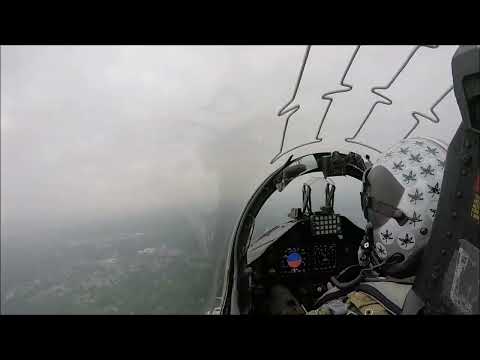
From 2016 to 2019, Craft trained pilots at NAS Meridian. At the end of the tour, he had another career decision to make.
“I kind of worked out this really good deal. There’s an actual Naval Air Station Fort Worth and there was one job there I wanted just because the Dallas hub for Southwest was right there 20 minutes away.
“I worked out a deal where I actually got to go be the Air Ops of NAS Fort Worth, a ground job Monday through Friday. I could leave Fridays around noon and go fly on the weekend just a little bit to stay current with Southwest.
“That was a real busy two years (2019-2021). Monday through Friday, I’m at the base and almost every weekend I would go straight from the base with all my pilot stuff for Southwest and go out for a quick weekend trip and then come home late Sunday evening.
“My wife’s in bed, kids are already in bed and then I’m waking up before everyone and going to work on Monday morning for work at the naval air station,” Craft said.
At the end of 2021, Craft said he wanted to end his 20-year career on a flying tour, returning again to NAS Meridian. He is in charge of the flight instructor training unit, teaching the future instructors how to teach.
His official military career will end June 1, though his last official Navy flight will likely come in February due to accrued leave. After that, Craft will become a full-time pilot for Southwest, likely relocating to the Dallas area.
He admits he will miss aspects of the Navy, even as his flying career continues.
“Just the comradery and like the awesome esprit de corps and the relationships you have with your buddies and the squadron and things like that,” Craft said. “It still kind of exists in the airline world, but every trip you go on, it’s gonna be a different guy in a cockpit with you.
“Some of them have military backgrounds and you can kind of cling to that. But a lot of them are not. Just hands down the comradery of work hard, play hard, let’s go get this mission done.
“And being a good friend. you know that he’s got your back in life and you got his back in life kind of thing. The thing a lot of people feel in the military, hands down.”
This was a great article. I take great pride in having been a part of your education. I still remember the time you stopped in at SHS wearing your dress uniform. Every girls jaw just dropped as you walked into the classroom.
Wishing you continued success