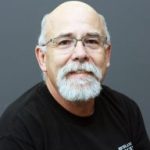

MANSFIELD — There will be a newly elected 1st Ward representative when Mansfield City Council convenes in January.
That’s because Laura Burns, appointed to the position by Republicans in January 2020 to complete an unexpired term, is being challenged by Democrat Joshua Koehler in the Nov. 2 general election.
The winner will represent the ward of 8,405 residents on the city’s southeast side, earning an annual salary of $8,311.
The challenger will have his work cut out for him in a ward that has gone heavily Republican in recent elections.
Michael Hill was unopposed when he was re-elected to the seat for in 2013. David Falquette, later appointed to an At-large seat and then City Council president, received 67 percent of the votes cast in 2017.

The similarities
Burns and Koehler do have similarities. Both are relative newcomers to political races, but both have also been involved in community efforts.
The 40-year-old Burns, the daughter of a retired Mansfield police officer, frequently attended City Council meetings and helped organize for Moms Clean Air Force, a group that advocates climate change solutions to Ohio lawmakers. Her work for the organization included articles on various climate-related topics.
Koehler, 27, was elected to the Richland County Democratic Party Central Committee in 2020 and continues to serve. Koehler helped found the Mansfield Gay Pride Association and volunteers with Love on a Mission, a nonprofit that helps LGBTQ youth.
Both were educated through local private schools. Burns graduated through the Mansfield Christian Homeschool Program in 1999 before earning a bachelor’s degree in biology from Oral Roberts University in 2003. Koehler earned his degree from Temple Christian School in 2012.
Both work in scientific fields. Burns is the data coordination group supervisor for Charles River Laboratories in Ashland. Koehler works as a pharmacy technician and has been on the front lines during the COVID-19 pandemic injecting vaccines.
THE ISSUES
Both candidates were asked to respond to some of the issues raised by residents during the six-week “Talk the Vote” listening tour arranged by Richland Source.
Public transit
Both said they favor expanding public transportation opportunities, particularly Richland County Transit, an idea that seems to be gathering momentum.
The transit system operates under its own board, but City Council does provide some funding and council members are in a position to lobby for changes to the operating hours it offers and geographic area it serves.
“I would love to see RCT services expanded. They could bring so much more to the people in our town. We have people who don’t have cars, or families that only have one car, and they are limited in getting to work. How are we supposed to grow as a community if people cannot get to work?” Burns said.
Koehler said improved public transportation is a “huge issue” for city residents.
“It’s very important we provide a vast, accessible and affordable transit system for people to get to work, take care of their families and to do whatever they need to do,” he said, adding he would like to see RCT offer evening and possibly weekend schedules.
He also said the city must do a better job of street maintenance, especially snow removal during the winter. “Streets need to be plowed quicker so that buses can get through, people can function, get to work and do the things they need to do,” Koehler said.
Mansfield City Parks
Both are in favor of improving the city’s parks, though they divert in their enthusiasm for additional funding. The city administration unveiled a parks “master plan” in 2020, a laundry list of projects that carries a $29 million total price tag.
Leaders have called the plan a “wish list” that would take years to implement. The city’s parks and recreation department now is funded only through the city’s PRIDE tax, which allocates about $850,000 per year, two-thirds of which is spent annually on mowing and maintenance.
Koehler, a Robinhood Lane resident who said he has helped organize a clean up day at Fox Glen park in his neighborhood, said he would work to help establish a priority list of projects.
Koehler said he would also be in a favor of a possible tax increase on the ballot for 2022 that would designate city parks as the sole recipient of the funds.
“Yes,” he said. “Absolutely.”
Burns, who lives on Beechdale Drive, hesitated when asked about a parks-only tax issue.
“I would have to see it before I got excited about it one way or the other,” she said. “We have to be more creative with the way we fund things like this. I don’t love the idea of a new tax, but we need the service. We need parks to be clean and safe and ADA compliant. They must be places for people to gather and feel safe. I am not for or against (a nex tax), but we have to get more creative.”
One suggestion Burns offered was to be more creative with outlying spaces in some parks, reducing the need for mowing.
“It’s nice to have property, but do we really need to mow to every edge? Couldn’t we plant flowers or covering grasses on these outlying sections that aren’t used? If we didn’t spend so much on mowing, we could do more with equipment and lighting.”
Economic development
Koehler said the city should focus its resources on areas that need it the most, particularly the the north end.
“The city should be serving the most underdeveloped and underserved parts of the city. There should be another Ocie Hill Community Center. Residents in the north end deserve to have a place like that. We have heard at council meetings and from residents how hurt they were when the neighborhood center was closed,” Koehler said.
Burns agreed, but said better communication from the city administration to residents is also crucial in terms of explaining how funds can be used. For example, City Council recently approved spending about $2 million in federal American Rescue Plan Act funding to repair a collapsed 19th century storm sewer that was discovered during the summer.
“A lot of times when we get these (federal and state grant) funds, people think we can just stick them in whatever account we want and use it how we want. It would do our city a lot of good if there was a way to communicate there are only certain ways some of these funds can be used.
“Yes, the (city) infrastructure is bad and we want to fix it. But we have to use appropriate funding to do these things,” she said.
Trash hauling/illegal dumping
These issues were raised in 2019 during “Talk the Vote” sessions, resulting in a four-part series of articles in Richland Source in February 2020.
City Council, in March of 2021, took a stab at creating trash-hauling zones, which would result in private haulers working in specific areas of the city on one day a week. The idea was dropped when residents and haulers opposed any such move.
Koehler said one solution to dumping and trash problems would be the return of a citywide recycling program.
“That needs to be a part of this conversation,” he said. “Tires. Bottles. Cans. If we had more organized recycling, we would cut down on some of our trash issues.
“I would ask citizens to come together. If you see trash, organize a neighborhood clean up. That’s what I have done. As an elected official, it would be part of my responsibility to headline events such as these. I would put my talking into action.
“It’s what I have done and what I will continue to do.”
Burns was part of a unanimous vote by council to scrap the zoned-hauling idea earlier this year. She said her decision was based on input from residents in the 1st Ward who were concerned over increased trash hauler traffic on one day on roads such as Middle-Bellville and Logan.
“I love the idea of everything being synchronized and us having this perfect system, but we are human beings and not everything is feasible,” she said.
In terms of illegal dumping, Burns said she is in favor of increased enforcement, perhaps involving the Richland County Sheriff’s Office through the county’s Solid Waste District.
Council, in May of 2020, approved the five-year solid waste district plan, which could include a litter control enforcement officer.
According to the 210-page plan, a litter patrol officer in the sheriff’s department could be created that would help enforce illegal dumping and other violations within the county, including the City of Mansfield.
“There is a potential to reintroduce this program during the planning period if funding is available. The (Richland County Solid Waste Management Authority) would hire a deputy sheriff to patrol for and respond to litter complaints,” the plan says.
“We have great people in the (city’s) codes and permits department, but there are only so many,” Burns said. “I am hoping, with county involvement, we can get on top of some of these dumping situations immediately. If we can catch stuff earlier, it might not become so bad.”
Homelessness
There is a growing issue with homeless residents in the community, especially in the downtown Central Park area.
A month ago, Richland County Commissioner Tony Vero said the apparent visible rise in homeless residents in downtown Mansfield was prompting him to see how the county can help. He said commissioners have been contacted by multiple business owners and residents “inquiring what we can do.”
Since that time, the city has learned it will receive $1 million in federal funds to assist with homeless residents and those at risk of becoming homeless.
The money was allocated to the city through the American Rescue Plan Act through the Home Investment Partnerships Program. It’s in addition to the $21 million the city is receiving in other ARPA funds.
Koehler said the key to solving the homeless issue is to allocate resources to determine the root causes.
“We need to provide more mental health services, more drug addiction services. These need to be more accessible to everyone. I see these kinds of issues almost every day in the pharmacy.
“It breaks my heart. People get a job, get the coverage and help they need, and start to get back on their feet. Then they lose their job, can’t afford treatment and the (homeless) cycle begins all over again. We need more funding for these services,” he said.
“In the downtown, there is not enough affordable housing. We need to get our landlords into this conversation, as well. Perhaps we can provide vouchers to house people temporarily in a couple of places that have open apartments,” he said.
Burns said she is glad to see the city receiving the homeless funds.
“Honestly, the last year and a half has been so hard on people,” she said. “I have looked at what some cities have done, looked at some ideas. Wouldn’t it nice, for instance, to look at building Tiny Houses that could provide shelter and provide places for people to live?
“We need to build up our community rather than driving around and casting disparaging glances at people they think are not working,” Burns said, adding more could be done with rental and mortgage assistance to prevent people from becoming homeless.
“We have housing — and food — insecurity issues in Mansfield,” she said. “I want to be as compassionate as possible toward people in that situation.”
The campaign
Koehler said he made the decision to run for office to “represent constituents who have been overlooked and ignored, and to lift up the voices of underserved communities in Mansfield.”
He said he has been well received during a campaign that has seen him knock on more than 550 doors.
“I will be knocking until Election Day,” he said. “I have had so many great interactions with my constituents, many of whom have told me they don’t know who their council person is.
“It’s been far more positive then negative. People are interested and proud that a younger person has stepped up to the plate and is proposing fresh, new ideas. I hope I can excite younger generations to become more involved, and to vote.
“Everyone deserves to have a voice through their City Council representative and that is the type of elected official I intend to be,” Koehler said.
Burns said she joined council to help insure public money was invested in ways that would have a longer lasting, positive impact on the community. She has been a staunch advocate of the city’s safety forces.
“What you see is what you get from me,” she said. “People can always contact me, ask me questions, voice their concerns. I wish more people would reach out.
“I have enjoyed walking around (during the campaign) and talking to people who may be outside in their yards, striking up one-on-one conversations. That’s what I love,” she said.