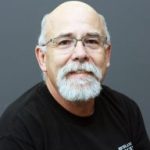

MANSFIELD — Jon Van Harlingen allowed the dry dam engineering/design proposal out of the Mansfield City Council public utilities committee meeting Tuesday night.
But not without a bit of verbal sparring, er, discussion.
The 3rd Ward councilman, armed with updated numbers from city Finance Director Linn Steward, spent the better part of an hour warning his colleagues about his “very serious financial concerns.”
The dry dam is aimed at alleviating flooding in Mansfield’s north end and would remove 106 acres from the flood plain, according to city engineer Bob Bianchi.
Van Harlingen, the utilities committee chair who has said he supports the dry dam, continued to sound financial alarms, particularly regarding the city’s sewer fund, which would pay for the engineering/design work.
“What if we can’t pay for it? What if the EPA comes in again (with mandated improvements). We’re cutting (sewer funds) down to the bare minimum. I am very concerned about that,” Van Harlingen said.
Jason Lawrence, representing the 5th Ward, has been one of the leading proponents for getting the two-year engineering/design work project started in order to have the city in position to apply for potential federal and state funding for the $15 million estimated needed for construction.

“In my daily walk, I ran into a constituent and we talked about the dry dam. Her response was, ‘They just don’t care about the north end.’ That’s disheartening,” Lawrence said.
MOVING AHEAD
After a sometimes pointed 63-minute discussion with some other council members, Van Harlingen, the committee chair, moved to allow the $1.5 million proposed contract for design and engineering services for the dry dam to proceed.
The committee, including 2nd Ward council representative Cheryl Meier and council At-large member Phil Scott, voted unanimously to set a schedule for the proposal that calls for a first reading on Aug. 17, a second reading on Sept. 7 and a final reading and vote on Sept. 21.
Afterward, Van Harlingen said his financial concerns remain, despite allowing the proposal out of committee, albeit grudgingly.
“It doesn’t mean I will will vote for the legislation,” he said afterward. “I just simply took it out (of committee) because of public comment.”
The Touby Run Mitigation project, aka the North Lake Park dry dam, has been discussed by the city for six years.
After initial plans were formed in 2018 and properties and easements for the work were acquired, City Council set it aside in 2019 when a $17 million city-wide water meter replacement program was launched.
That replacement program was aimed at increasing water revenues with more accurate measurements. That project was delayed in 2020 due to the COVID-19 pandemic and about 9 percent of the city’s 18,200 meters are still not replaced, Public Works Director Dave Remy reported Tuesday.
That increased revenue was expected to help pay for the dry dam — revenue Van Harlingen said is not yet being received at expected levels.
With at least five of eight council members speaking in favor of moving ahead with the engineering/design work in recent meetings, Van Harlingen admitted he didn’t know if there were enough votes to stop it.
“That I don’t know,” he said after the meeting. “This could be a repeat of 2019.”

Previously, Van Harlingen has pointed out the city has taken on more than $50 million in bond debt in recent years, including $10 million for state-mandated improvements at the wastewater treatment plant and $35 million for state-mandated improvements at the water treatment plant.
THE FINANCES
At the request of Van Harlingen, Steward went over water and sewer funds with council, estimating the sewer fund will have an unappropriated balance of about $1.7 million at the end of 2021.
She factored into that about $500,000 for work to bypass a collapsed 19th century storm sewer that has kept Bowman Street closed for about a month.
Dividing the engineer/design contract work for the dry dam in half over two years would drop that balance to around $1 million by the end of this year, Steward said. The finance director projects the water fund will have a $96,770 balance at the end of 2021.
“That’s not a lot extra to keep in a sewer fund, especially when you see what kind of repairs can happen that you don’t know about,” she said.
Remy told council that monthly water and sewer revenues have been climbing this year as meters are installed, though Steward forecast 2021 revenues in both accounts will short of estimates for the year.

At-large council member Stephanie Zader, while admitting the dry dam is a large project, said residents she has spoken with want to move forward. She urged the committee to move the proposal forward.
“The feedback we have received from people from the north end is they think this is important. I am having a really hard time with this being stuck in a committee of three people, making the decisions for all of us. I think this is something that council has a whole should have a say in,” Zader said.
More than 45 minutes into the meeting, Lawrence asked Van Harlingen, “For the sake of time, what do you need to see? What do you need to hear to move this project forward?”
Van Harlingen replied he would like to see the same thing City Council asked for when it delayed the project in 2019 — increased revenues.
“We were talking about two steady years of revenues that we could count on,” he said. “That’s what I would look at and that’s what the administration was looking at and discussing at the same time. That’s basically what they agreed to.”
FEDERAL FUNDS
Van Harlingen and other council members asked Bianchi and Steward about the potential for federal grants for the project and also raised the possibility of using some of the city’s $21.8 million in expected American Rescue Plan funds.
Bianchi said he didn’t know if ARP funds could be used for the dry dam, though he said the money could be used to improve water/sewer systems, perhaps allowing more local funds to be used for the dam itself.
Steward told council she believes it’s possible ARP could be used for the dry dam and has requested information about such an expenditure from the U.S. Treasury, which is overseeing the program.
“If everybody could just be a little patient, there might be funds (available) at the state or federal level,” Steward said.
Council President David Falquette cautioned against waiting too long.
“My biggest concern on waiting to do the engineering study … to apply for grants and funds … if that’s not done … if the city has not made the investment in the engineering study, there is virtually no chance of getting awarded (federal/state funds.)
“Nobody’s interested in talking to someone who doesn’t have their engineering study done,” Falquette said.
Zader said, “That’s what I understand, too. I feel that it would be better to be first in line rather than 30th in line because we were unprepared.”
Even as he prepared to release the proposal from committee, Van Harlingen warned fellow lawmakers.
“What happens if we have a major water line break and we don’t have the money? What are we going to do? We’re spending it. We’re taking it right down to zero,” he said.