
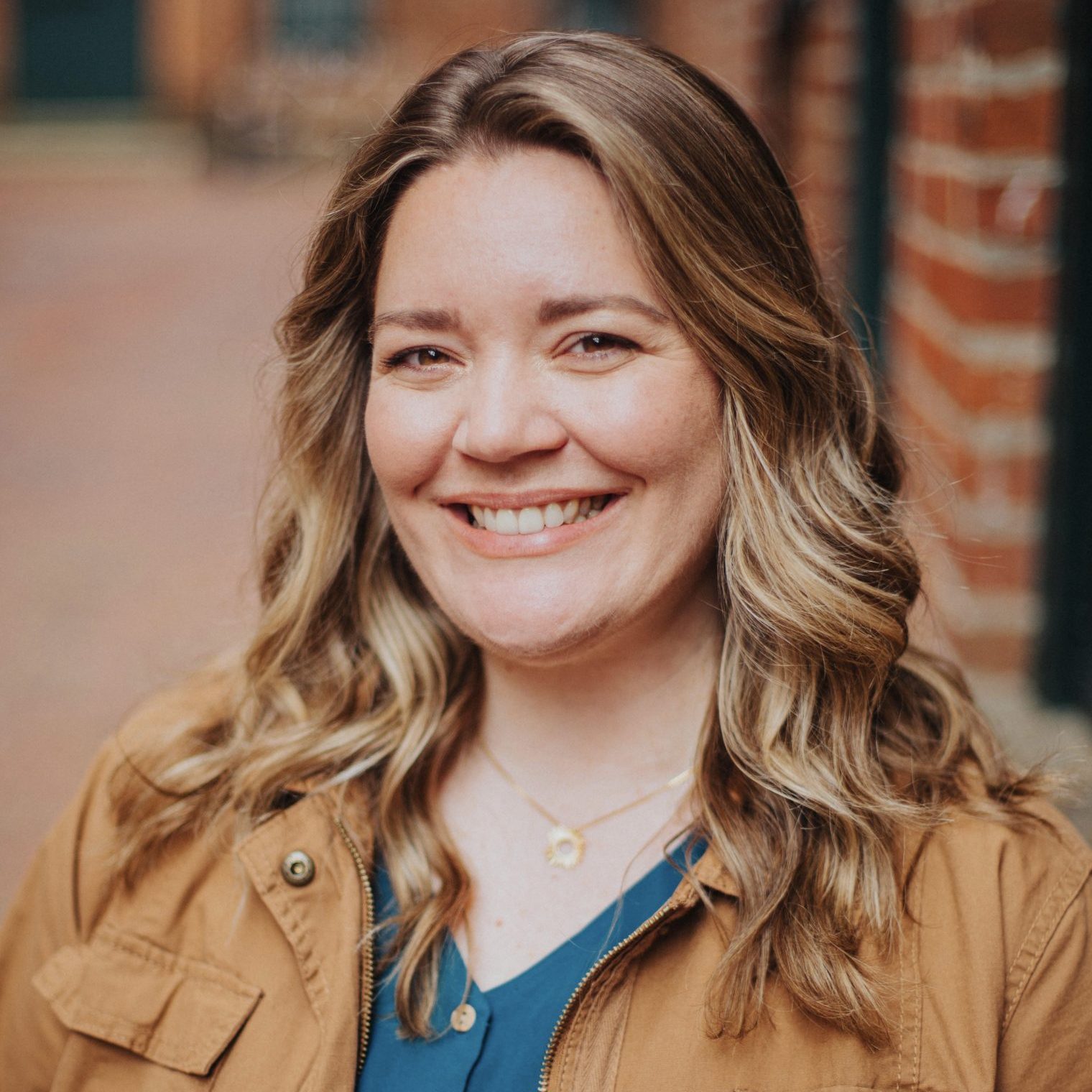

MANSFIELD – Downtown Mansfield isn’t just a place of work or play for Chuck Hahn. It’s his neighborhood.
As a kid growing up in the 1950s, Hahn remembers catching the bus from Prospect Park to get haircuts, go shoe shopping, or go out to eat with his family. Back then, everything you’d ever need could be found within a few blocks.
Never did he imagine more than 60 years later, Hahn would still call downtown Mansfield home.
“It’s just how life evolves sometimes,” he said.
-

PICT0032.JPG -

PICT0033.JPG -

PICT0034.JPG -

PICT0035.JPG -

PICT0036.JPG -

PICT0037.JPG -

PICT0038.JPG -

PICT0039.JPG -

PICT0040.JPG -

PICT0041.JPG -

PICT0042.JPG -

PICT0043.JPG -

PICT0044.JPG -

PICT0045.JPG -

PICT0046.JPG -

PICT0047.JPG -

PICT0048.JPG -

PICT0049.JPG -

PICT0050.JPG -

PICT0051.JPG -

PICT0052.JPG -

PICT0053.JPG -

PICT0054.JPG -

PICT0055.JPG -

PICT0056.JPG -

PICT0057.JPG -

PICT0058.JPG -

PICT0059.JPG -

PICT0060.JPG -

PICT0061.JPG -

PICT0062.JPG -

PICT0063.JPG -

PICT0001.JPG -

PICT0002.JPG -

PICT0003.JPG -

PICT0004.JPG -

PICT0005.JPG -

PICT0006.JPG -

PICT0007.JPG -

PICT0008.JPG -

PICT0009.JPG -

PICT0010.JPG -

PICT0011.JPG -

PICT0012.JPG -

PICT0013.JPG -

PICT0014.JPG -

PICT0015.JPG -

PICT0016.JPG -

PICT0017.JPG -

PICT0018.JPG -

PICT0019.JPG -

PICT0020.JPG -

PICT0021.JPG -

PICT0022.JPG -

PICT0023.JPG -

PICT0024.JPG -

PICT0025.JPG -

PICT0026.JPG -

PICT0027.JPG -

PICT0028.JPG -

PICT0029.JPG -

PICT0030.JPG -

PICT0031.JPG -

PICT0032.JPG -

PICT0033.JPG -

PICT0034.JPG -

PICT0035.JPG -

PICT0036.JPG -

PICT0037.JPG -

PICT0038.JPG -

PICT0039.JPG -

PICT0040.JPG -

PICT0041.JPG -

PICT0042.JPG -

PICT0043.JPG -

PICT0044.JPG -

PICT0045.JPG -

PICT0046.JPG -

PICT0047.JPG -

PICT0048.JPG -

PICT0049.JPG -

PICT0050.JPG -

PICT0051.JPG -

PICT0052.JPG -

PICT0053.JPG -

PICT0054.JPG -

PICT0055.JPG -

PICT0056.JPG -

PICT0057.JPG -

PICT0058.JPG -

PICT0059.JPG -

PICT0060.JPG -

PICT0061.JPG -

PICT0062.JPG -

PICT0063.JPG
Sitting in the conference room of his downtown office, Hahn recalls the day he was renewing his driver’s license at the Bureau of Motor Vehicles across the street when the building caught his eye. He struck a deal with property owner John Fernyak in 2003 to renovate the building into an office – it was originally built as a feed store in the 1880s.
Then about six years ago, the two men came to an agreement for Hahn to turn the upstairs of his office building into a living space. Hahn uses the space to entertain during the summers and lives there during the week, though he avoids the noisiness of night life on the weekends.
Hahn created the space, he said, to showcase what could be done with this kind of property in downtown Mansfield. Bringing living spaces back downtown has been a passion of Hahn’s for the last 10 years.
“I think because of my roots, I may look at things differently than somebody who’s just moved into the area,” he said.
Just down the street at 128 North Main Street is the headquarters of Downtown Mansfield Inc., in the process of its own renovation of a downtown building. For CEO Jennifer Kime, her connection to downtown living is also personal.
“My mom lived downtown, she had a house on 3rd Street in the early 1970s,” Kime said. “The city took it by eminent domain and tore it down for a parking lot.”
Now, Kime works to bring people back to her mother’s neighborhood. For the past 17 years, Kime has worked at Downtown Mansfield Inc. to develop downtown Mansfield in many different aspects, from economic development to entertainment.
In the last 10 years, Kime said interest in living downtown has grown exponentially, and even more so in the last five years.
“Typically, when apartments become available, they’re leased right away,” Kime said. “We don’t have a lot of months in between when property owners say they have spaces for rent.”
According to Kime, there are currently 35 people on the official wait-list for living space downtown, not counting the many personal anecdotes Kime hears about the demand for living downtown. The problem is, the supply isn’t keeping up with demand.
There are 52 apartment units currently developed downtown, including the 25 units in the Voegele apartment building at 211 North Main Street, the largest developed space for apartments in downtown Mansfield. All other units are second-story units housed in random buildings, one or two at a time.
According to Kime, there are another 63 potential undeveloped apartments in downtown Mansfield. These are classified as “undeveloped apartments” because that was indeed their last intended use. However, developing these properties means taking a big risk.
But before we dive into reasons not to develop more apartments in downtown Mansfield, let’s first look at the reasons why we should.
According to Smart Growth America’s guidebook for downtown revitalization, creating housing downtown is a way to diversify the downtown economy.
(Re)Building Downtown: A Guidebook for Revitalization
“Workers provide the pulse of downtown between 9 and 5. Creating the option for people to live downtown as well means people will be there around the clock to keep the place hopping,” the guide states on Page 16. “And market demand is so high for homes in walkable neighborhoods that not creating them is a missed opportunity.”
The guide suggests encouraging downtown housing through mixed uses, such as buildings with retail or commercial space located below housing, providing home ownership grants, or leveraging historic resources – all options that have been explored as downtown housing develops in Mansfield.
So what’s the hold-up in creating more housing options downtown?
The biggest issue, according to Kime, is the economics of it all.
“When you look at current leasing rates, they’re low compared to the cost of construction,” she said. “So when you’re trying to attract outside developers to your project, you’ve got to make up that difference or you’re just asking them to delay recouping their investment for years and years longer.”
This, Kime says, is the other side of the coin to having an affordable community like Mansfield. Rent rates in downtown range between $500 and $1,200 depending on number of bedrooms, location, size and amenities.
For an outside developer to come to Mansfield and rehab an old building into apartments, or to build an entirely new apartment complex, one would have to charge enough for enough units to make the economics work, Kime said.
“And the more units you do, the more scale you have,” she said. “If you’re doing just one, that rental rate will have to be a lot higher, and will the market support that?
“We know the market exists for it, and we really believe that it’s here, but we’ve got to be able to show that and provide some incentives to make that work.”
Showing the demand for downtown housing would require a feasibility study, something discussed at a meeting of the Richland County Commissioners on Feb. 12.
“There has been kind of a clamoring in downtown Mansfield for some high-end apartment living,” Commissioner Tony Vero told Richland Source.
Vero agreed with fellow commissioners Marilyn John and Darrell Banks that more than anecdotal evidence needs to be seen of the need before commissioners become involved in the downtown housing project proposed at their meeting.
The focus was a $4 million downtown apartment building proposed by Steve McQuillin, an exterior replica of the 1871 county courthouse that would sit where the courthouse once sat in the front lawn of the Richland County Administration Building.
“The apartments would be convenient, attractively laid out, spacious, prestigious and would become a sought-after place to live, as shown by downtown revitalization in other Ohio cities,” McQuillin stated in a written proposal. “Importantly, this could become a catalyst for encouraging residential growth in downtown Mansfield, and could reasonably be expected to encourage private investment in nearby buildings around the square and in Brickyards Commons, a few blocks from here.
“In a larger role, this building could play a pivotal role in re-imaging Mansfield as a vibrant, progressive and historic community, one of the state’s leading mid-size cities and the heart of north central Ohio.”
A proposed public/private partnership could provide space for 35 apartments and 2,300 additional feet of retail, office and/or meeting space, McQuillin said.
“Public/private partnerships in communities our size are really how those first bigger projects get done,” Kime said. “There is that risk to outside developers or private investors; if we’ve got those public/private partnerships taking place, you can use private investment coupled with public land or incentives that can help drive at least some model projects that can then spur development.”
This isn’t the first downtown housing project McQuillin has worked. In December 2017, McQuillin along with Carl and Annamarie Fernyak, were the recipients of historic preservation tax credits from the Ohio Development Services Agency to rehabilitate two historic buildings in downtown Mansfield.
The two buildings that received tax credits were the Hedrick House at 159 N. Walnut Street owned by McQuillin, and 46 Park Avenue West owned by the Fernyaks. Both buildings were originally built in the 1800s, and sat vacant for years.
“Because housing and real estate costs are relatively low in Mansfield, it’s cost-prohibitive to fix up an existing building when you can spend less money and get a new building,” said Carl Fernyak in 2017. “These tax credits allow you to reduce the expense of fixing up an old building.
“If you have nice buildings in your downtown, it gives people a reason to visit or live there. Otherwise, they’re a bunch of vacant buildings which create a whole new set of problems for a community.”
The Fernyaks intend to restore the building at 46 Park Avenue West into four upstairs apartments, with space for small businesses on the ground floor.
“A thriving community has a combination of living, shopping and recreation areas downtown,” Carl said. “If done properly, a downtown is a community of people living, working and playing.”
Fast forward two years, and renovations on the Park Avenue West building are fully underway. According to Annamarie Fernyak, the deadline to complete the space is Nov. 1 based on the deadline for the tax credits they received.
Annamarie Fernyak has long been involved in downtown revitalization in Mansfield. She opened her first business downtown back in 1994 because of the walkability that being downtown offered.
“I’m one of those people who feel like I have to be the change,” she said. “That’s my main philosophy, and if I want to live in a certain type of community, I feel it’s my responsibility to create it. Fortunately I have the ability to do that, so I invest my intentions, my attention and my money back into revitalization.”
But why invest in building apartments downtown?
“No property owners are willing to spend the money to renovate for residential because the cost is exorbitant. I wanted to be an example of what’s possible,” Annamarie said. “We’re only really at the beginning of offering downtown housing.”
According to Annamarie Fernyak, the pricing of housing in downtown Mansfield is far below what’s possible. But both Fernyak and Kime agree that housing should be offered at many different price levels in order to create a thriving neighborhood downtown – especially considering higher prices often are the catalyst to attract new developers.
“We feel it’s important that downtown is for everybody,” Kime said. “It’s easy to let money, influence and power to dictate what happens to your community, and I think it’s really important that downtown Mansfield looks and acts like Mansfield, and that there’s space for everybody to feel comfortable.”
It’s also a priority for Aurelio Diaz, who has been a resident of downtown Mansfield for the past decade. When Diaz purchased his first apartment downtown, there was no brewery, no brickyard entertainment, not even a coffee shop.
“When I moved downtown, everyone was concerned about safety because there wasn’t a lot of things going on,” he said. “But I think it has changed – there’s a demand for living spaces and apartments, but that’s very limited until we can develop more.”
Currently, Diaz works alongside Kime at DMI as the Community Development Coordinator, working with specific districts downtown to revitalize the area. He also has his finger on the pulse of the hopes and fears of the downtown residents.
“There’s a huge fear of gentrification – as downtown becomes successful and everyone moves down here, are they going to be booted out? We need to ensure the people who made this district what it is are always appreciated and involved, and their concerns are listened to,” he said.
The best way to douse those fears, Diaz said, is to involve downtown residents in these conversations – something he’s been passionate about in his new position.
“There have always been committees and boards where they weren’t really including people who live in the area, and that’s something we wanted to fix,” Diaz said. “It’s about being more creative and challenging that.”
Despite some reservations, Diaz was confident that current residents of downtown Mansfield are actually encouraging of more places to live. Living downtown, Diaz said, has helped him to learn the history of Mansfield from those who have been downtown for years.
“People who come back to Mansfield may not feel good about it at first, but they take so much pride in the town from learning the different things that happened before them,” Diaz said. “It’s a good opportunity to be a part of something bigger, which I think we’re all doing.”
It was this sense of pride and community that drew Allison Pence to living downtown. For the past 20 years, Pence lived in a suburb of Ontario – now as an empty nester, she was looking for a place to start the next chapter of her life.
Pence always fantasized about the idea of living in a loft or studio apartment downtown, comparable to Cleveland or Columbus. Then, by a happy coincidence, she stumbled upon a newly-renovated apartment in the Kafer’s Flowers building on Mulberry Street.
“The way I found it, I feel like it was kind of a sign,” she said. “I had just gone to look at a place that was not good, and I was in tears and stopped over at a friend’s place, and she told me about the apartment being renovated right next door. Then the opportunity opened up and I jumped on it.”
The building had been transformed from a storage space into a 1,500 square-foot apartment by Eric Biddle and his business, Rebuild Local of Central Ohio.
“I just figured instead of dreaming or talking about it, I’d just actually do it,” Biddle told Richland Source in March. “Everyone has all these ideas or complaints about downtown or whatever, so I’m just going to do it, and then move on from there to take it to the next level, get a proof of concept.”
It was the perfect placement for Pence, who had been searching for months for a place to rent downtown. Being an artist, she needed a studio space and a place to park her art-themed renovated mail truck, called “Art Van Go.”
Yes, there are some trade-ins to living downtown versus the suburbs – for example, the hum of traffic outside her window at night. But for Pence, it was a much-needed step out of her comfort zone.
“I love vibrancy and celebrations and people coming together; I like being around the hustle and bustle,” Pence said. “I feel like there’s so much life going on around here now.”
In her new neighborhood, Pence often walks downtown for coffee or around the streets of Mansfield for exercise. She noted she feels “totally at-ease” passing people on the sidewalks of downtown Mansfield, even at night.
“I’ve been on some streets that I didn’t even realize existed because you don’t necessarily take your car down little side streets,” she said. “I’ve discovered parts of our city I’ve never been before.”
Downtown living isn’t for everybody, Pence acknowledged. But she believes that if more housing options were available, they’d be filled in a minute.
“I think there are a lot of people that are excited about downtown and what’s happening, and want to be involved,” Pence said. “The vibrancy and the things that are happening, if you like to be involved in different events it makes sense to come downtown.
“If somebody is on the fence about it, sometimes it’s best to take the leap. And honestly, it was like a breath of fresh air.”
All evidence points to the fact that Pence’s prediction is probably right – if the supply rose to meet the demand, downtown housing could be booming in Mansfield. For Kime, it’s about exploring every possible option to make that happen.
“We’re constantly trying to find new ways to piece this together,” Kime said. “There isn’t one model, there isn’t one answer, if you just explore every possibility that comes to the table and continue to have these conversations over and over again, hopefully at some point we’re talking about how we were able to get it done. But until then, you just keep going.”
It’s not a problem with an easy solution – or a fast one. But Kime thinks it will be worth it in the end, especially considering the ripple effects that downtown living could have on Mansfield.
“People always talk about when the businesses left … but the deterioration of downtown began when people stopped living downtown,” she said. “People were scattered all over the place, walking everywhere, going everywhere. It provided them with an ownership of downtown.
“You’re not only establishing the downtown as this viable ecosystem that’s sustainable, you’re creating this sense of ownership in the downtown. And then the sense of pride increases, the sense of investment increases, the sustainability increases, and then we get where we want to go.”
