


MANSFIELD — A comic from the Buckeye State. The Godfather of Boston comedy. And a comedian from New York — but not NYC.
If we were playing Jeopardy, one correct question would be: Who are Josh Sneed, Don Gavin and Andy Pitz?
But a second right question is: Who is performing Aug. 15 at the 39th Third Saturday in August comedy show at the Renaissance Theatre in downtown Mansfield?

The popular clean comedy show was founded and still produced by local businessman Sam VanCura, who personally reviews a long list of potential comics for the event before selecting the trio.
One such comic VanCura found years ago for the TSIA was the legendary Jeff Foxworthy.
“Before he hit it big,” VanCura said in the past with a laugh.
VanCura prides himself on shows with appeal to a wide range of audiences, including a base of about 900 people who come to the show every single year. With that base, a sellout is almost guaranteed.
“The show is not sold out yet, but we expect that to be the case,” he said Wednesday. “Tickets are available at the Ren or from me at tpi1@richnet.net or 419-610-4361.”
Richland Source interviewed all three veteran comedians in recent days. Here is what we discovered:
Josh Sneed: An Ohio comic forced to overcome a normal childhood
Josh Sneed had the kind of childhood most stand-up comics do not dream about.
Normal.
“I was born and raised in Cincinnati. Nice, solid family. Parents that were high school sweethearts who stayed together. We weren’t rich. We weren’t poor.

“It made it really hard to do stand-up comedy, if I’m being honest with you,” he said with a laugh.
“If I could have had just a little more struggle as a child, I think it would have given me more material.
“Honestly, though, I can’t complain about anything. I love growing up and living here and still being able to have a career here,” Sneed said.
Sneed’s dad wasn’t a comic. But he worked at Kenner Toys, the legendary Cincinnati-based toy company founded by the Steiner brothers in 1947 on Kenner Street. It was famous for creating Star Wars action figures, the Easy-Bake Oven and Stretch Armstrong
“My dad made these popular toys in the ’80s and I believe that kept him young … like a big kid. Humor was always a part of his life and his friendships and I picked up on that at a young age.
“The kind of humor he introduced me to, slapstick and Saturday Night Live, stuff like that … it really sort of set the groundwork for what ended up being my sense of humor,” Sneed said.
After high school, Sneed went to college for a couple of years.
“I got a job at Proctor & Gamble, which was the job I was going to college to get. But in the back of my mind, I dreamed of being on Saturday Night Live.”
The curiosity led him to his first open mic night.
“I immediately fell in love with stand-up comedy.”

For more than three years, Sneed kept his day job, but also did comedy at night. That changed on a Friday the 13th in 2001 when he decided to push his chips to the center of the table and try comedy full-time.
He has never regretted that choice. During the last quarter century, Sneed has toured the country, while also appearing on television. He had his own special on Comedy Central. He’s been seen on Last Comic Standing, and is one of the most played comedians on Sirius/XM radio.
But he recognizes not every swing produces a home run.
Six months into his comedy career, Sneed was hired by the Dayton Dragons, a minor league baseball team, to dress up like an umpire and do a short stand-up routine during a game. But just before he went out on the field, the actual umpire got into an argument with the Dragons’ manager and best player, ejecting both.
The last thing the Dayton fans wanted was more from an umpire. Boos instead of guffaws.
“I have to go out pretending to be him and make people laugh. The whole thing unfolds with me being tackled by one of the guys who throws out t-shirts to the crowd.
“I use that moment on stage now so people know that when I say, ‘It’s good to be here,’ I mean it. I have a history of comedy gigs you aren’t supposed to take, but I was too green to know it,” Sneed said.
His comedy style is based on things he experiences.
“When you have done stand-up as long as I have, at some point your brain switches into observational mode. Your senses are more heightened and your brain tells you that you should remember this or talk about that,” he said.
Sneed lamented his busy tour schedule — along with an apparel company he helped launch and enjoying family life with children — doesn’t allow more time for writing new material.
“I’m always jealous of comics that are … I’m not saying it’s easy for them … but they are just more prolific. The way they generate new material. They have a discipline that allows them to maybe go sit in a coffee shop and write whatever is in their brain,” he said.
“My best material just comes to me organically. But I don’t try to force it. I don’t really do a lot of open mic nights to try out new material. When I am headlining and have 45 minutes, I will work some new thoughts into the middle. Over time, that evolves into something that hasn’t been recorded yet,” Sneed said.
This will be Sneed’s third performance at the Renaissance Theater, though his first Third Saturday in August show.
“I am excited about coming back. It’s just a beautiful venue and I have loved every time I have been there. When I got the offer to come back, I said ‘yes, absolutely, I can’t wait.”
Don Gavin: High school english teacher to comedy legend
Don Gavin was doing comedy before doing comedy was cool.
And he was doing it before he was actually being paid to do it.
Dubbed the “Godfather of Boston comedy,” the 78-year-old Gavin worked as a high school teacher and a bartender before taking to the stage, two occupations he believes lend themselves to stand-up comedy.
“When I started (comedy) in Boston in 1978, about 30 percent of those of us trying comedy were school teachers. I think it’s the fact you’re used to talking in front of people and you’re used to an audience that may not like you going in,” said Gavin, who moved to Florida five years ago after seven decades in Beantown.
“To be a good teacher, I think you have to be a good entertainer. And I worked as a bartender, which also requires the gift of gab,” said Gavin, who also coached basketball and track. “To be honest, I enjoyed coaching more than teaching.”

When he started, Gavin said the only real comedy clubs were in Los Angeles and New York.
“In Boston at the time, when you said comedy club, people didn’t know what you were talking about,” he said.
That led Gavin, who had tried local venues for a couple of years, to join a piano-playing friend. They jumped into a car and headed to the west coast, visiting clubs along the way where Gavin could perform.
He took a sabbatical from his teaching gig for the trip.
“I wasn’t sure in Boston if I was a big fish in a small pond or whatever. My friend also has the gift of gab and we would (go into cities) and he wrangled (comedy) spots for me. I probably performed five or six places before we go to San Francisco.”
When they arrived, they went to a club that, as luck would have it, was offering a multi-night stand-up comedy competition.
“The night I went up, I think there were 28 people who auditioned. One guy was picked and that was me. I made it into the top-five overall of the entire competition.
“People said, ‘You drove all the way to San Francisco for this?’ I go, ‘I don’t even know what THIS is,” Gavin recalled with a laugh.
“I had no idea. It just looked like a comedy club.”
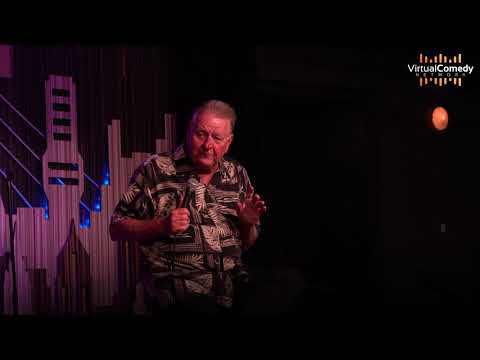
After they returned to Boston, Gavin went back to his day job at the school.
“I owed them like two years of teaching, which seemed like 12. I was teaching and coaching and doing comedy all at the same time. I got about five hours of sleep. It was a tough period of time.
“And then I finally got out of everything … except comedy. I found that’s what I should be doing,” Gavin said.
Some 48 years later, he is still at it, a career that has included TV and movie deals, more comedy clubs than he can remember and “about 600 cruise ships.”
“In the heyday of the ’80s, I was insanely busy. In 1983, I worked 350 nights out of the year.
“I was always funny as a kid. There is nothing I enjoy better than being on stage and meeting 200, 300 or 500 strangers and winning them over.
“I still have the energy. I don’t work as much as I used to, but I still enjoy it,” Gavin said.
Just because Gavin is Boston born and bred, don’t ever call him a Red Sox fan.
“I am NOT a Red Sox fan because Red Sox fans think they are part of the team. They all go, ‘We did this. We did that.’ I am like, ‘I don’t remember you playing at all.’
“I am a huge basketball fan (Celtics), a Patriots fan and a Bruins fan.”
Gavin developed a friendship with Bruins’ legend Bobby Orr, who led Boston to Stanley Cup titles in 1970 and 1972.
“Hockey players are much more down-to-earth than other athletes. They came from hardscrabble lives and they appreciate the fact they’re making pretty good money now,” he said.
So what can the Mansfield audience expect?
Gavin said he will give the Renaissance audience a lot to choose from during his set.
“It’s fast-paced. If you don’t like this joke, you’re going to like the next one. Bang, bang, bang. That’s what I do,” he said.
“I don’t do any politics, any religious material. I stay away from the controversial stuff. I have some jokes that are older than my kids … and my kids are older than 50.”
Andy Pitz: From New York, but not that city
Andy Pitz was born and raised in New York.
But not New York City, which has a population about 30 times larger that of the Buffalo area where Pitz was raised.
Why do so many assume people from New York are from NYC?
“It’s the gravitational pull,” said the 58-year-old Pitz, who now lives in New Jersey. “90 percent of the (state’s) population lives there.
“Buffalo is a great city. I love it from April to mid-October. I have a brother who still lives there and it has come great comedy clubs. But the winter is just as brutal as people say,” he said.

Pitz got into comedy the really old-fashioned way. He grew up watching it with his dad, whose favorite comics were standup legends like George Carlin, Steve Martin and Rodney Dangerfield.
“My dad and I bonded over these comics. He had all of their records. I also had the middle-child syndrome — the one who has fight for attention and doesn’t get it automatically,” he said with a laugh
“From a young age, I just found standup comedy to be fascinating. These guys could just go on stage and talk about stuff they thought of themselves and connect with audiences and make them laugh. They were like rock stars … but they were by themselves.
“That kind of fascinated me and I just never got tired of listening to comedy,” Pitz said. “It was always great … either comics developing new stuff or new comedians coming out.”
Pitz had a knack for making people laugh — a trait college friends used to urge and push him to take to the stage himself in 1990 while he was still in school. He was working on a college internship in the Philadelphia area when opportunities really presented themselves.
“There were comedy clubs everywhere you looked,” he said. “Work was so prevalent and easy to get, especially if you were a clean comedian that didn’t swear or talk about sexually graphic things, which is how I have kind of always worked.
“I used to wear a tie. I was very nice and inoffensive and I took it very seriously,” Pitz said.
His early comedy was often observational, though it has developed into other areas as he developed through marriage, parenthood and divorce.
“I think audiences today want to get to know you as a person. They want to see a real person up there. Audiences have seen so much observational comedy that I think many don’t really care about how many cup holders there are in your car these days,” Pitz said.
“Stories, or mini stories or jokes about my life being the dad of a teenage girl and being divorced and traveling … it’s changed from observational to the personal/autobiographical,” he said.
Along the way, Pitz has developed his material with non-stop work at comedy clubs and other venues around the country. He has appeared on The Late Show with David Letterman and the Late Late Show with Craig Ferguson.
“I was also on Star Search, but that was pretty lame,” he wrote on his website.
Performance is the easiest part of the work for Pitz.
“(Comedian) Chris Rock had a great quote that comedians work during the day, we just collect our money at night. I write every single day, even if it’s just 15 minutes to half an hour. That’s my job,” he said.
“I (perform) every weekend. I live in the New York City metro area now, so last week I went into the city and did a couple of short sets in these showcase comedy clubs where they have eight to 10 comedians.
“I still do that once in awhile. Not as much as I used to … before I became a dad. But that was our training ground. It was crazy, but you got a lot of experience,” Pitz said.
He said he hopes people leave the Renaissance feeling energized from his show.
“The world is so stressful and negative and dark and awful. I don’t think a comedy show is the place to add to that. I think we should relieve some of that. I want people to see my show and recharge their batteries,” he said.
“Exhilarating is a good word I would go for.”
